Ask ten "promoters" what music promotion costs and you'll get ten versions of the same answer: "DM for rates." That's not a price. That's a fishing rod — the number at the end of it depends on how desperate you sound in the first message. Meanwhile agencies quote monthly retainers, playlist middlemen invent tiers, and nobody writes anything down where you can compare it. So here's the whole grid in one place: the typical market ranges for the main promotion services in 2026, next to the real floor prices listed on our own marketplace — every one of them verified live on autohype.ai on July 17, 2026, and set by the sellers themselves, not by us. Read it before your next "DM for rates" conversation. The industry hates this article, which is exactly why it exists.
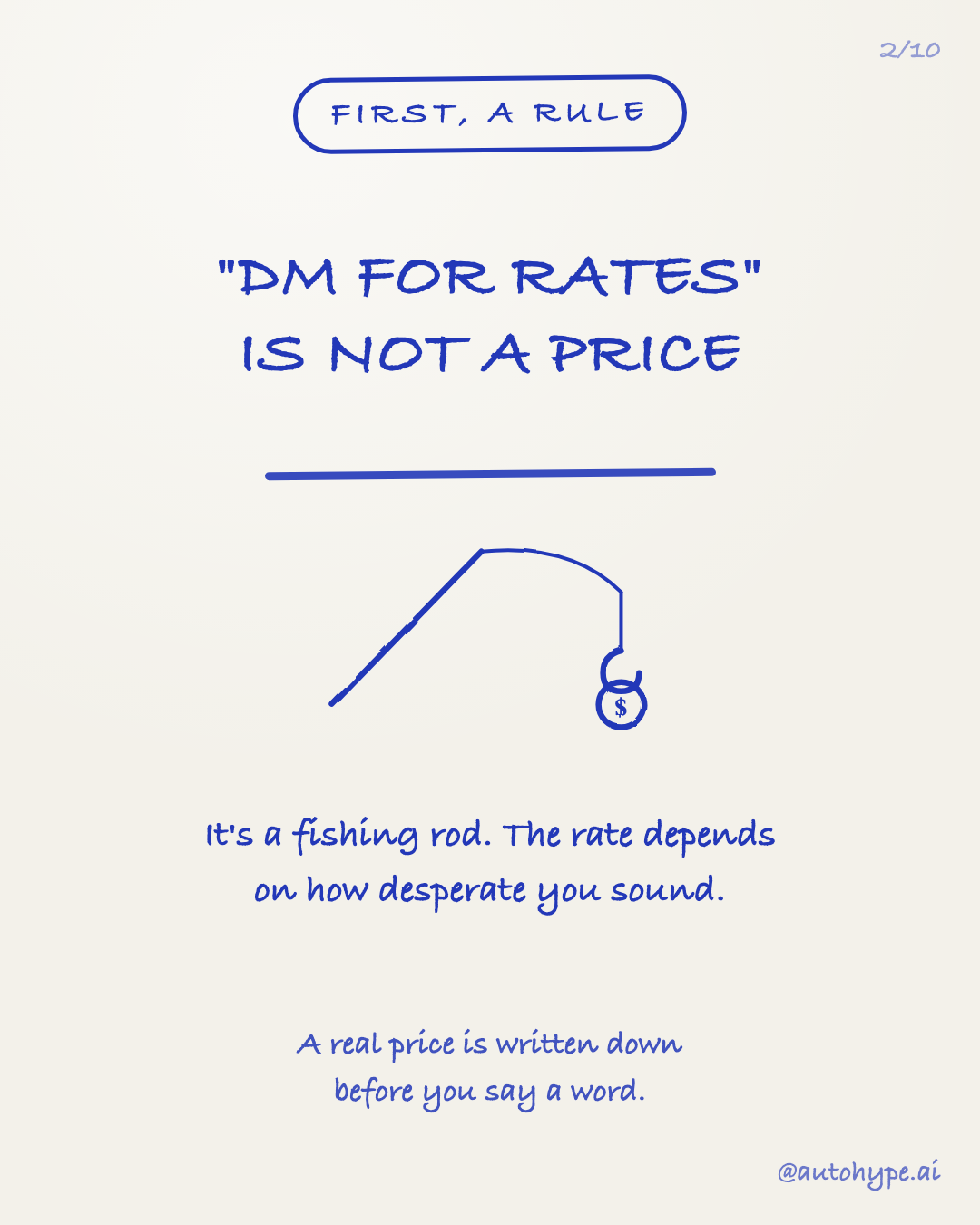
Rule one: "DM for rates" is not a price
A real price is written down before you say a word. That's the entire test. When a service has a public number attached, the seller commits to it no matter who's asking. When the number only appears after you've described your project, your deadline and your dreams, you're not receiving a quote — you're being appraised.
This is why the music promotion market feels so confusing: it isn't one market. It's thousands of private negotiations happening in DMs, each one priced to the buyer's perceived budget. Two artists can pay wildly different amounts for the identical service from the identical account, and neither will ever know.
The fix is boring: only buy promotion where the price, the deliverable and the delivery time are written down before checkout. Everything in the grid below follows that rule. Nothing in a DM does.
The 2026 price grid, service by service
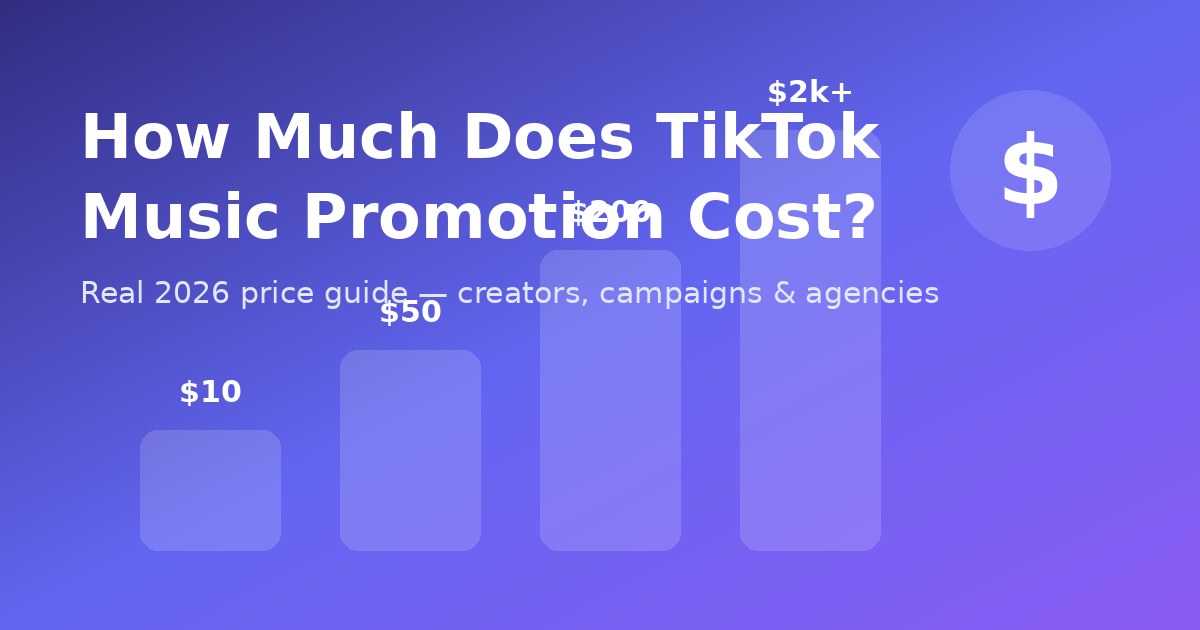
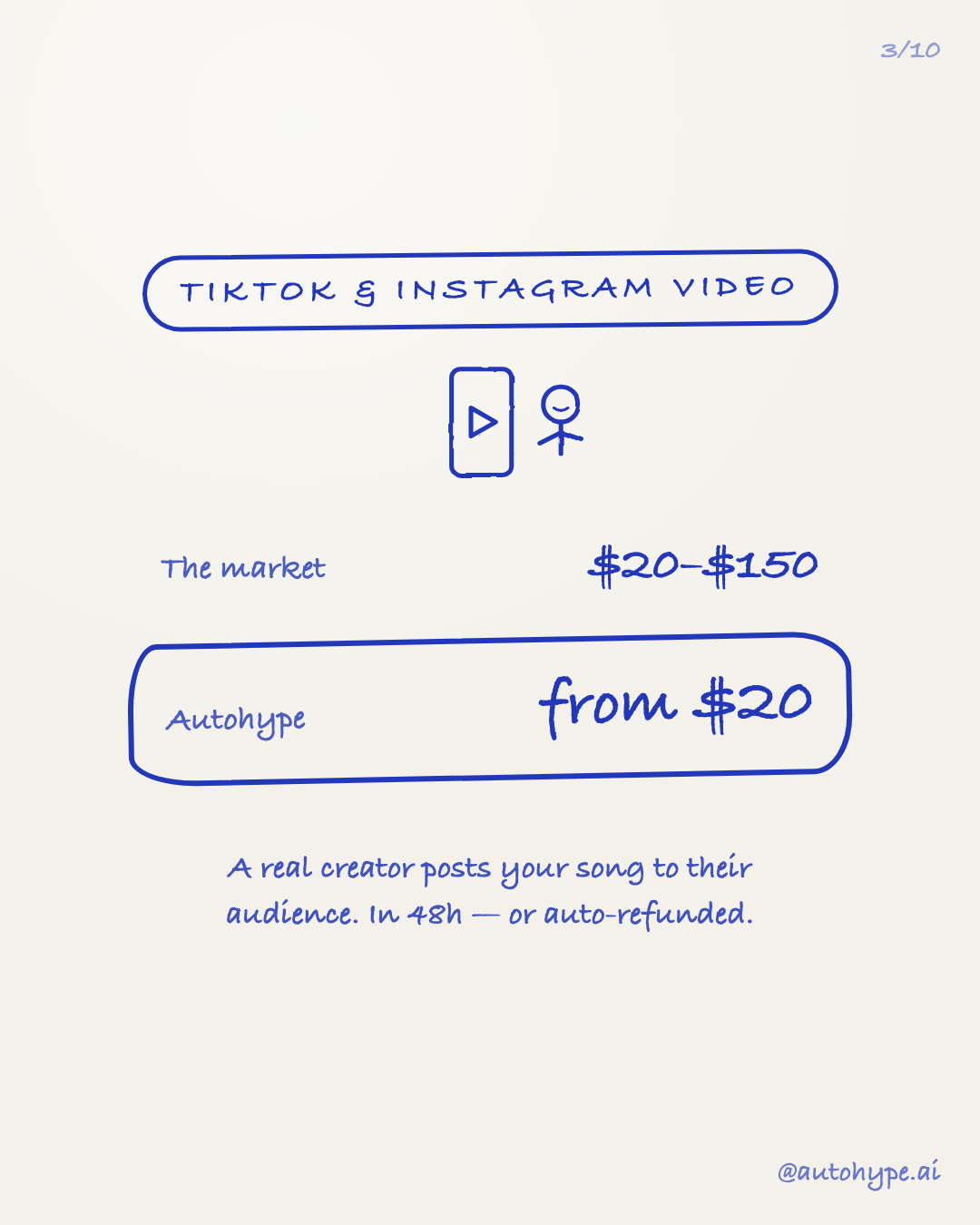
TikTok and Instagram creator videos typically run $20–$150 on the open market depending on the creator's audience size. On Autohype the floor was $20 on July 17, 2026: a real creator films a video with your song and posts it to their own audience, delivered within 48 hours or automatically refunded.
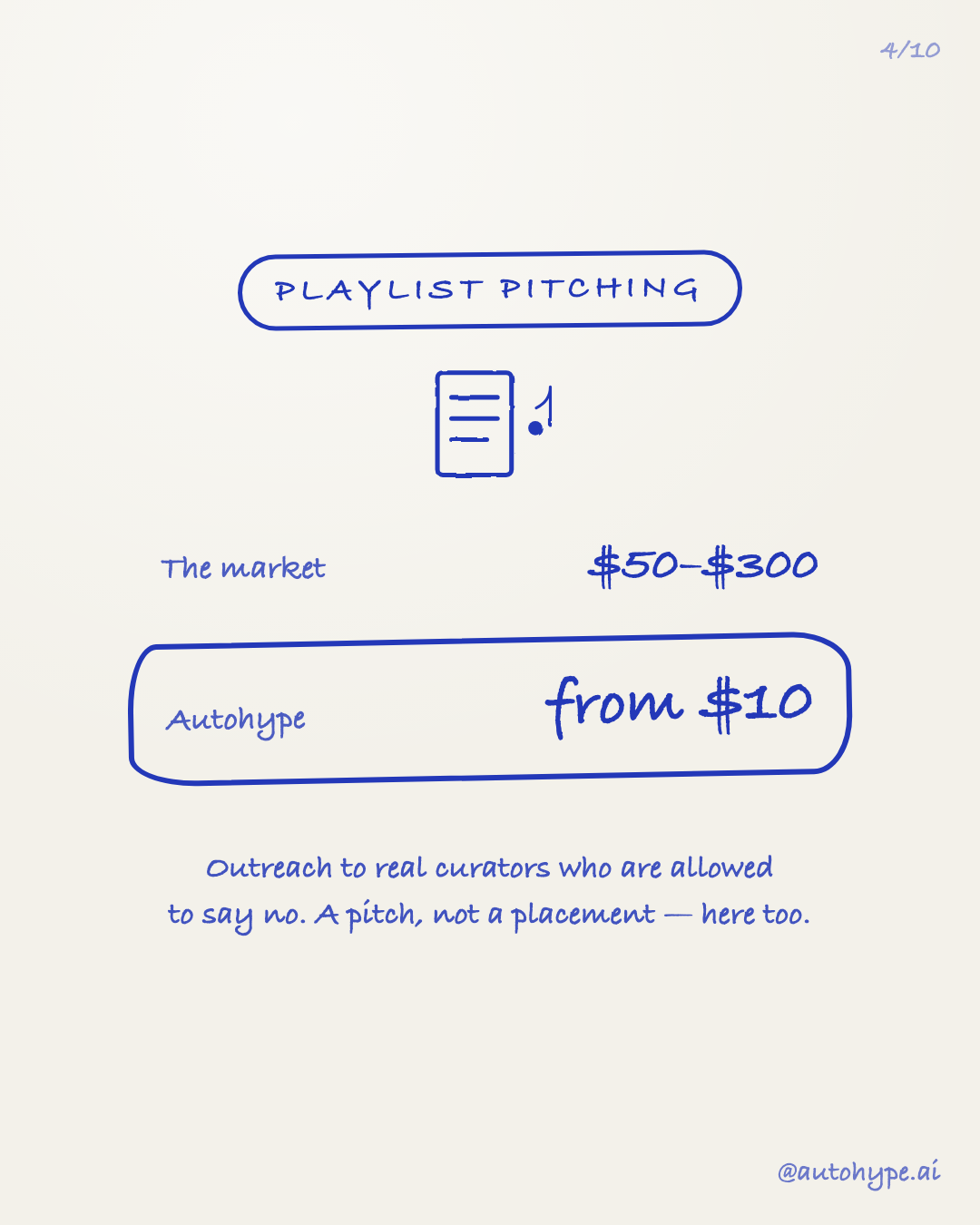
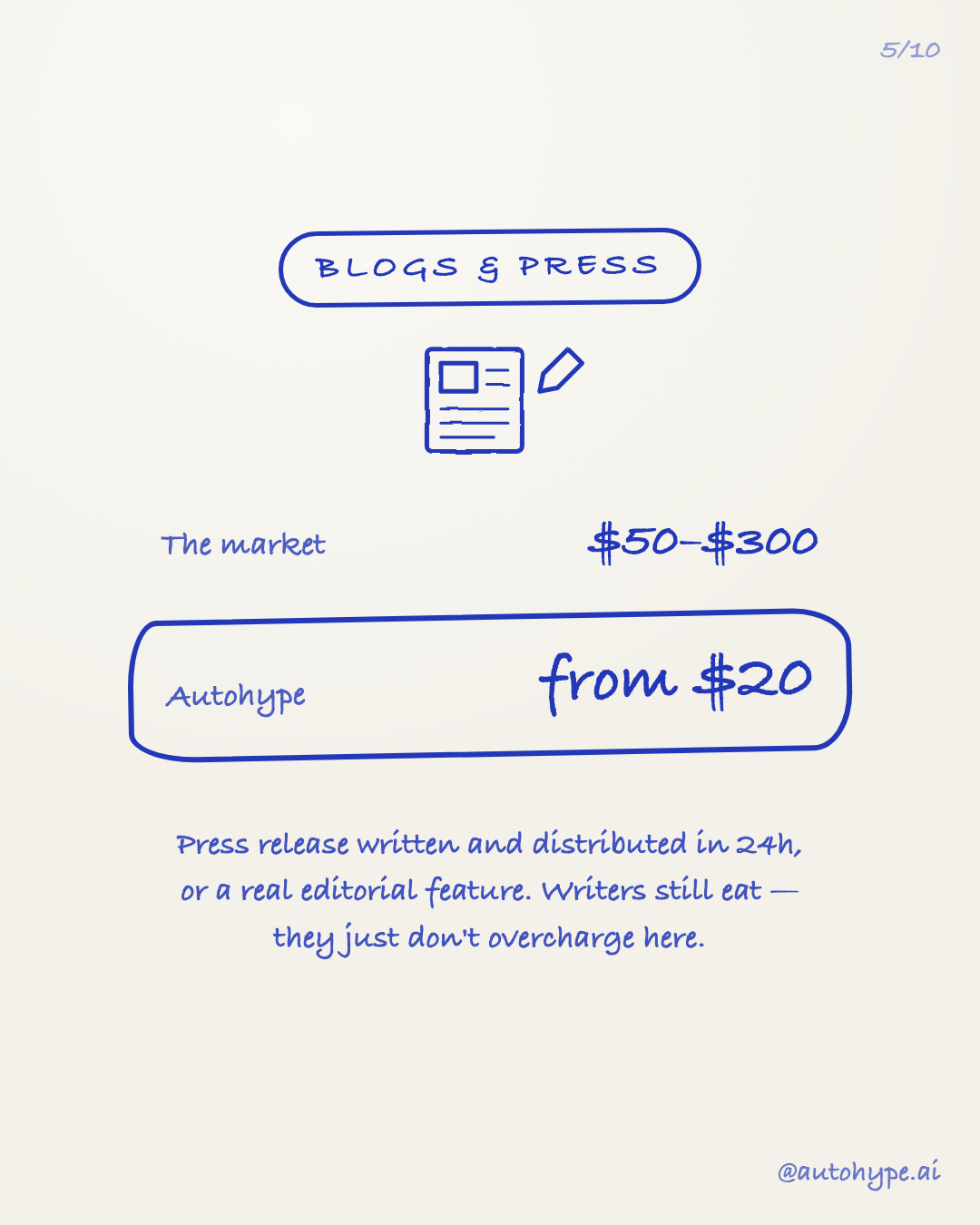
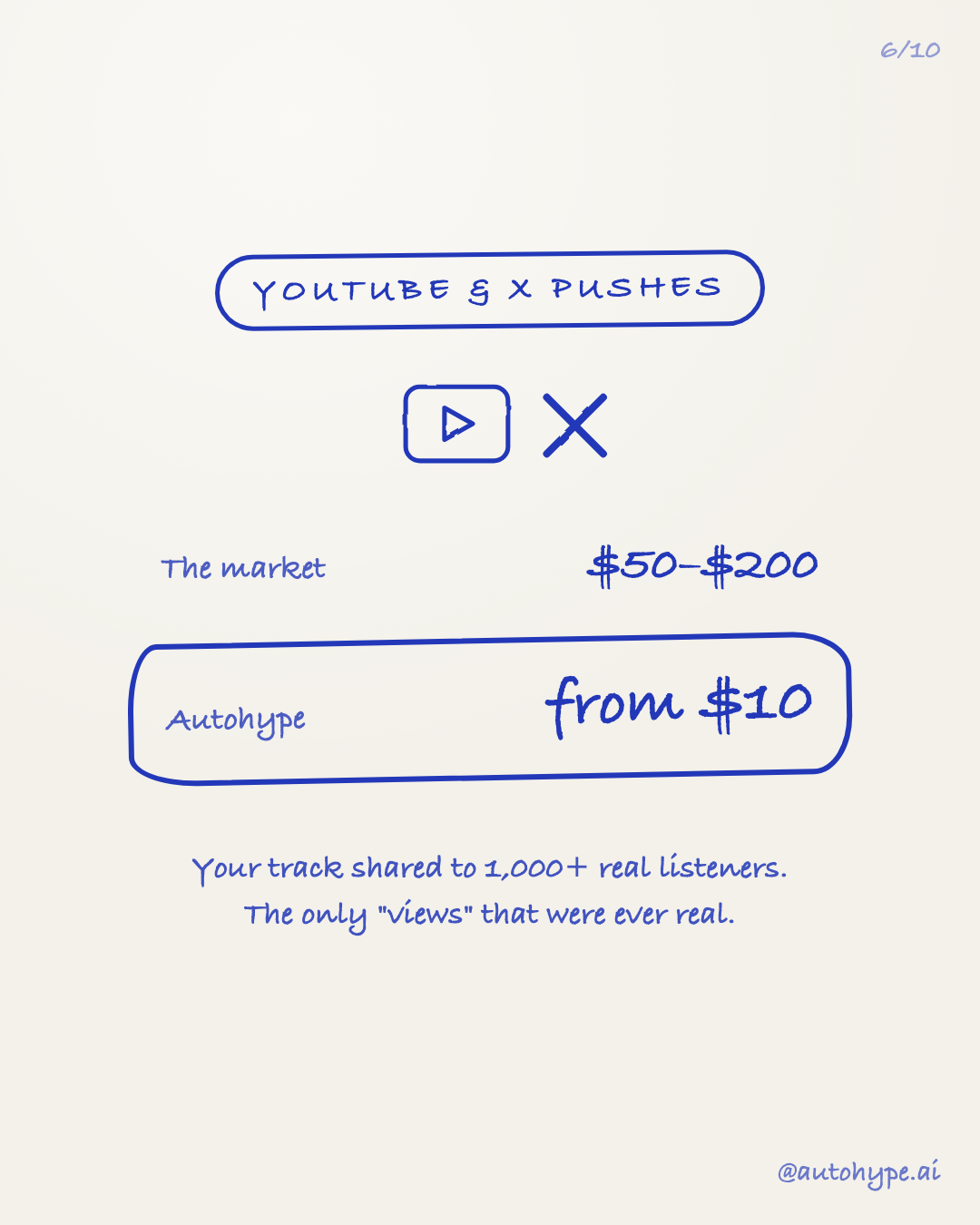
Playlist pitching runs $50–$300 at market rates — often for nothing more than an email forward. The marketplace floor was $10, and what you're buying is honest: outreach to real curators who are allowed to say no. A pitch, not a placement. Blogs and press typically cost $50–$300; the floor was $20 for a press release written and distributed within 24 hours, or a real editorial feature. YouTube and X pushes run $50–$200 at market; the floor was $10 for your track shared to an audience of over 1,000 real listeners.
Two caveats, stated plainly. These floors are starting prices set by individual verified sellers, so they move — check the live listings before you budget, and expect this article's numbers to be refreshed in January 2027. And a floor price buys the entry-level version of a service, not the biggest creator on the platform. That's what a floor means.
| Service | Typical market rate | Autohype floor | What you're buying |
|---|---|---|---|
| TikTok & Instagram video | $20–$150 | from $20 | A real creator posts your song to their audience — in 48h or auto-refunded |
| Playlist pitching | $50–$300 | from $10 | Outreach to real curators who are allowed to say no. A pitch, not a placement |
| Blogs & press | $50–$300 | from $20 | Press release written and distributed in 24h, or a real editorial feature |
| YouTube & X pushes | $50–$200 | from $10 | Your track shared to an audience of 1,000+ real listeners |
| Agency retainer | $2,000+/month | — | Meetings included. Ask what shipped. |
Why playlist pitching is cheap — and what it can never include
Notice that playlist pitching has the lowest floor on the grid. That's not generosity, it's honesty about what the service is: a well-crafted submission to independent curators who make their own decisions. The seller's work is the outreach and the targeting. The curator's answer is the curator's answer.
Which brings us to the fact that should be tattooed on this industry: access to Spotify's editorial playlists is not for sale. Not from us, not from anyone. Editorial placement decisions are made by Spotify's own team through the free submission process in Spotify for Artists. Anyone charging you money for "guaranteed editorial placement" is lying about a thing that cannot be bought, and the market rate for a lie should be $0.
Independent playlists are a legitimate target — real people curate them and real listeners follow them. Just make sure you're paying for a pitch to humans who can decline, because a playlist that accepts every paid submission is a playlist nobody actually listens to.
Compare Instagram repost campaigns and independent Spotify curator submissions. See which format fits your release, the deliverables, service fees and terms before ordering. No guaranteed views, streams or playlist placement.
The $20 test: bots or a human, same price
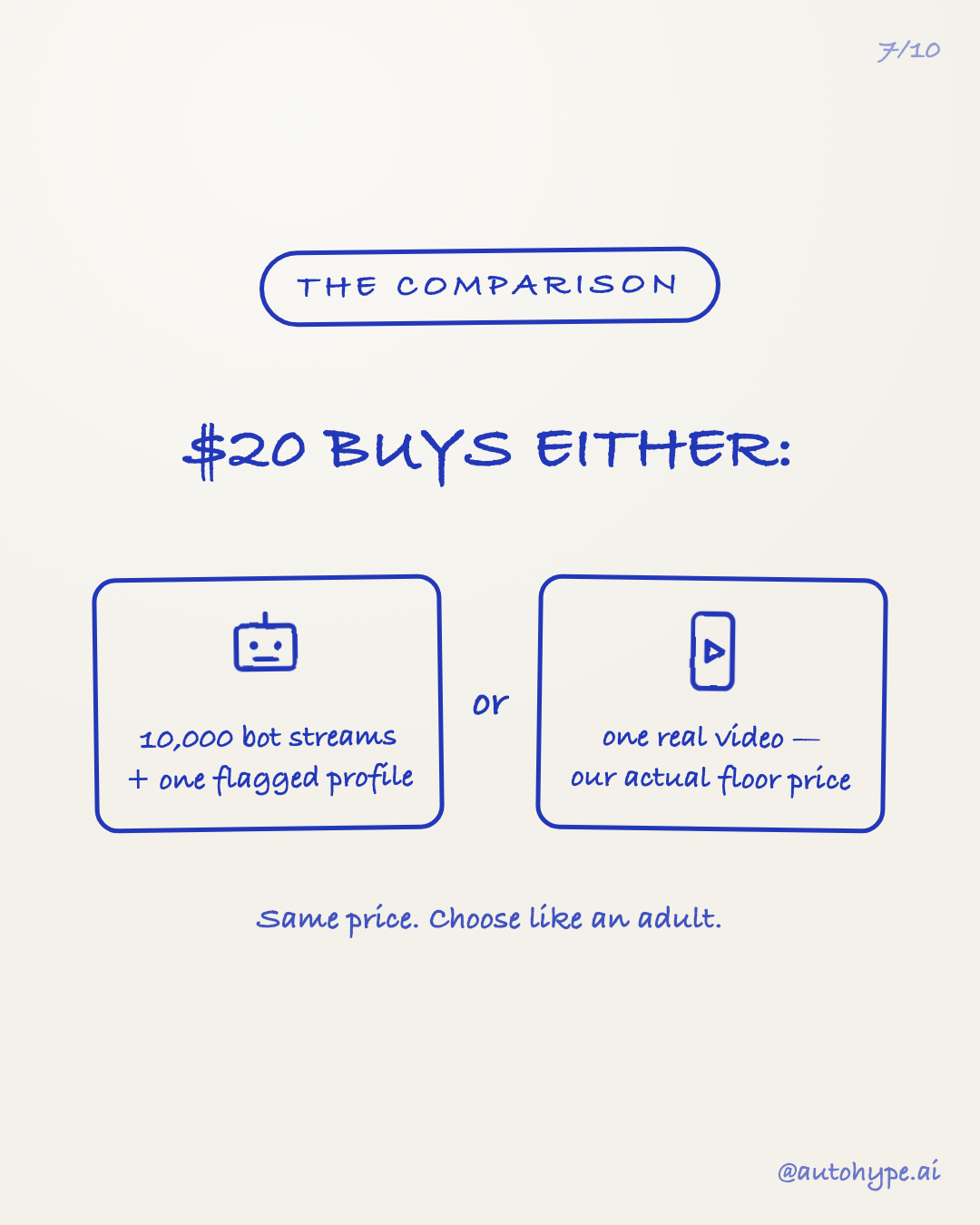
Here's the comparison that makes the whole pricing conversation concrete. Twenty dollars, spent badly, buys roughly 10,000 bot streams and one flagged artist profile — fake plays that streaming platforms actively detect and remove, with your account attached to the evidence. Twenty dollars, spent well, buys one real creator video at our actual floor price.
Same price. Completely different purchases. One is a number that evaporates and can take your catalog down with it; the other is a real person putting your song in front of their real audience. When someone offers you thousands of anything for the price of a pizza, the volume is the tell — real attention has never been that cheap, in any year, on any platform.
This is also why "how much does promotion cost" is the wrong first question. The right one is "what am I actually buying?" — because the cheapest real thing beats the most impressive fake thing at any price point.
The retainer trap
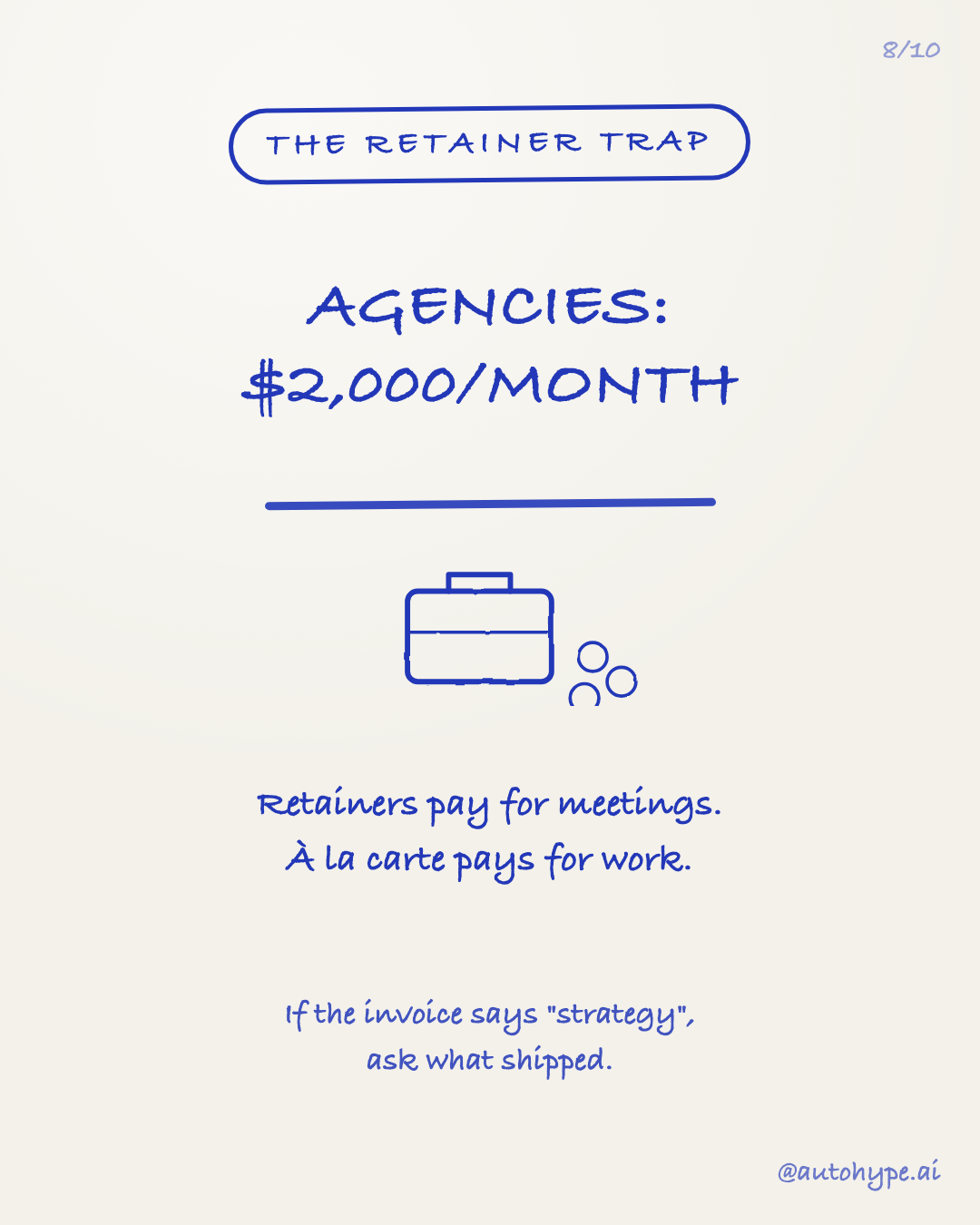
At the top of the market sit the agencies, and their unit of billing is the month. A typical indie-facing PR or marketing retainer starts around $2,000/month, often with a three-month minimum. Some agencies are excellent. But understand what a retainer structurally pays for: availability, meetings, reports — time, not deliverables.
The test is one question: "what shipped this month?" If the answer is a strategy deck and two calls, you paid $2,000 for a strategy deck and two calls. À la carte pricing inverts the incentive — you pay per deliverable, so the deliverable has to exist. A $20 order either arrives in 48 hours or it refunds. There is no version of that transaction where you pay for a meeting.
Retainers make sense when you have a full release calendar, a real budget and someone accountable for coordinating it all. For one song and a few hundred dollars, they're the most expensive way to feel busy.
How to actually budget in 2026
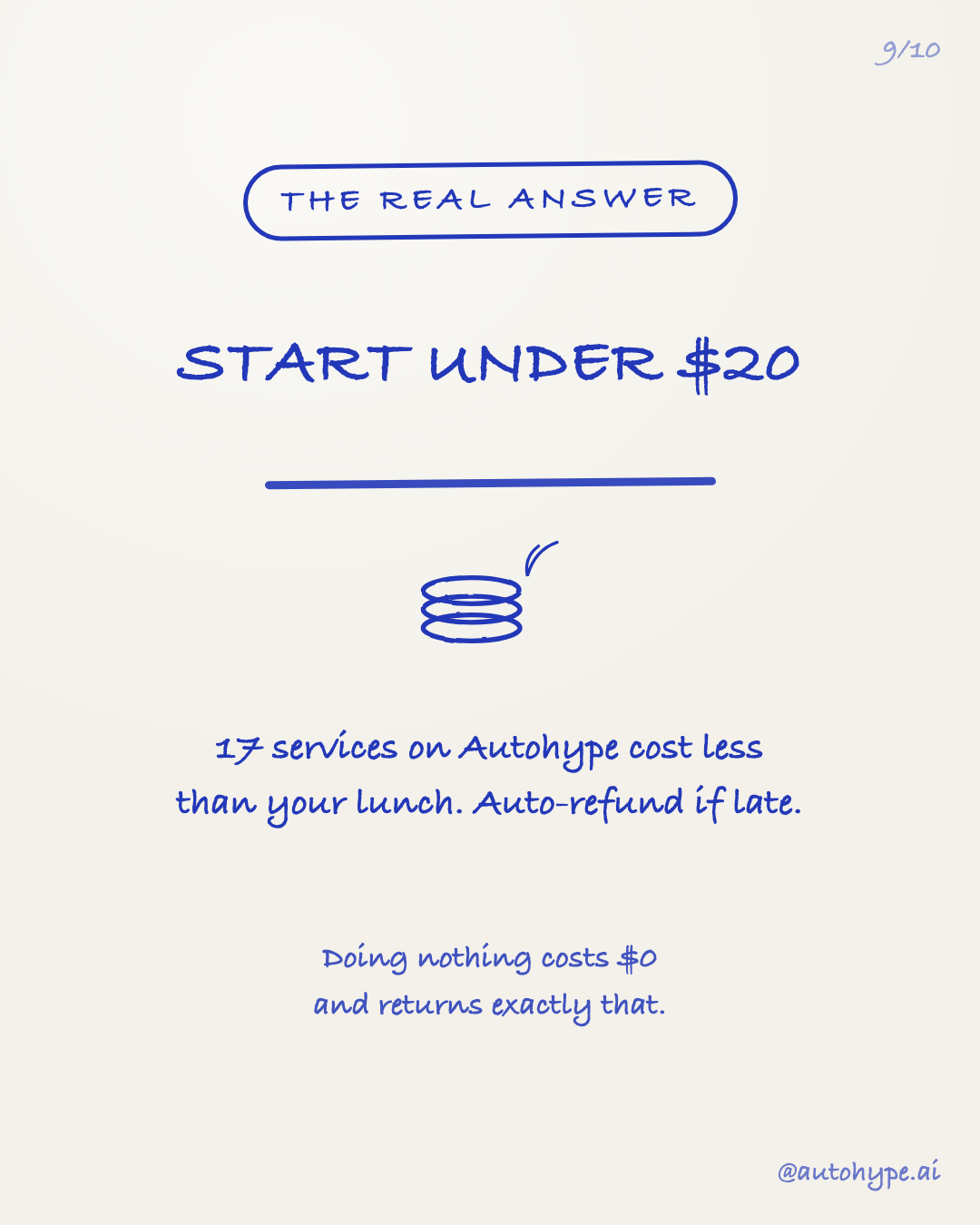
Start smaller than you think. On July 17, 2026, seventeen services on the marketplace were listed under $20 — meaning your first real promotion order costs less than lunch. Buy one thing, see how the seller communicates, see what delivery looks like, then scale what worked. That's the entire strategy, and it beats agonizing over a perfect plan you never fund.
Every order is protected the same way: the money sits in escrow until the work is delivered, and if the seller is late it refunds without you chasing anyone. We guarantee delivery, not results — no honest person in this industry can promise you streams, fans or virality, and the grid above prices honesty. Doing nothing remains the only option that costs $0 and returns exactly that.
| Budget | What it buys | Rough equivalent |
|---|---|---|
| $10 | A playlist pitch, or a YouTube/X push | Two coffees |
| $20 | A creator video on TikTok/IG, or a press release | Three coffees |
| $30 | A YouTube push AND a TikTok video | One week of coffee |
Choose the next step for your release.
Compare Instagram repost campaigns and independent Spotify curator submissions. See which format fits your release, the deliverables, service fees and terms before ordering. No guaranteed views, streams or playlist placement.
Compare artist campaigns →Frequently asked questions
How much should an independent artist spend on music promotion?
Start with a single small order — floors on marketplaces like Autohype were $10–$20 per service as of July 17, 2026 — and only scale what demonstrably worked. A $50–$100 test budget across two or three different services teaches you more than any pricing guide, because you learn which format suits your music before committing real money.
Why are marketplace prices so much lower than agency prices?
Because you're buying a single deliverable from the person who performs it, not a monthly retainer that covers meetings, reporting and account management. Sellers set their own prices and compete side by side, which keeps floors low. The trade-off is that you coordinate your own campaign instead of paying someone $2,000/month to do it.
Can I pay to get on Spotify editorial playlists?
No. Editorial playlist access is not for sale — placements are decided by Spotify's own editors via the free submission tool in Spotify for Artists. Anyone selling "guaranteed editorial placement" is lying about something that cannot be bought. Paid pitching is only legitimate for independent playlists, and only as a pitch that curators can decline.
Do any of these prices guarantee streams or followers?
No, and that's the point. A written price buys a defined deliverable — a video posted, a pitch sent, a press release distributed — with a refund if it isn't delivered. We guarantee delivery, not results. Any service that guarantees a specific number of streams or followers is describing bots, because real human attention cannot be promised in advance.