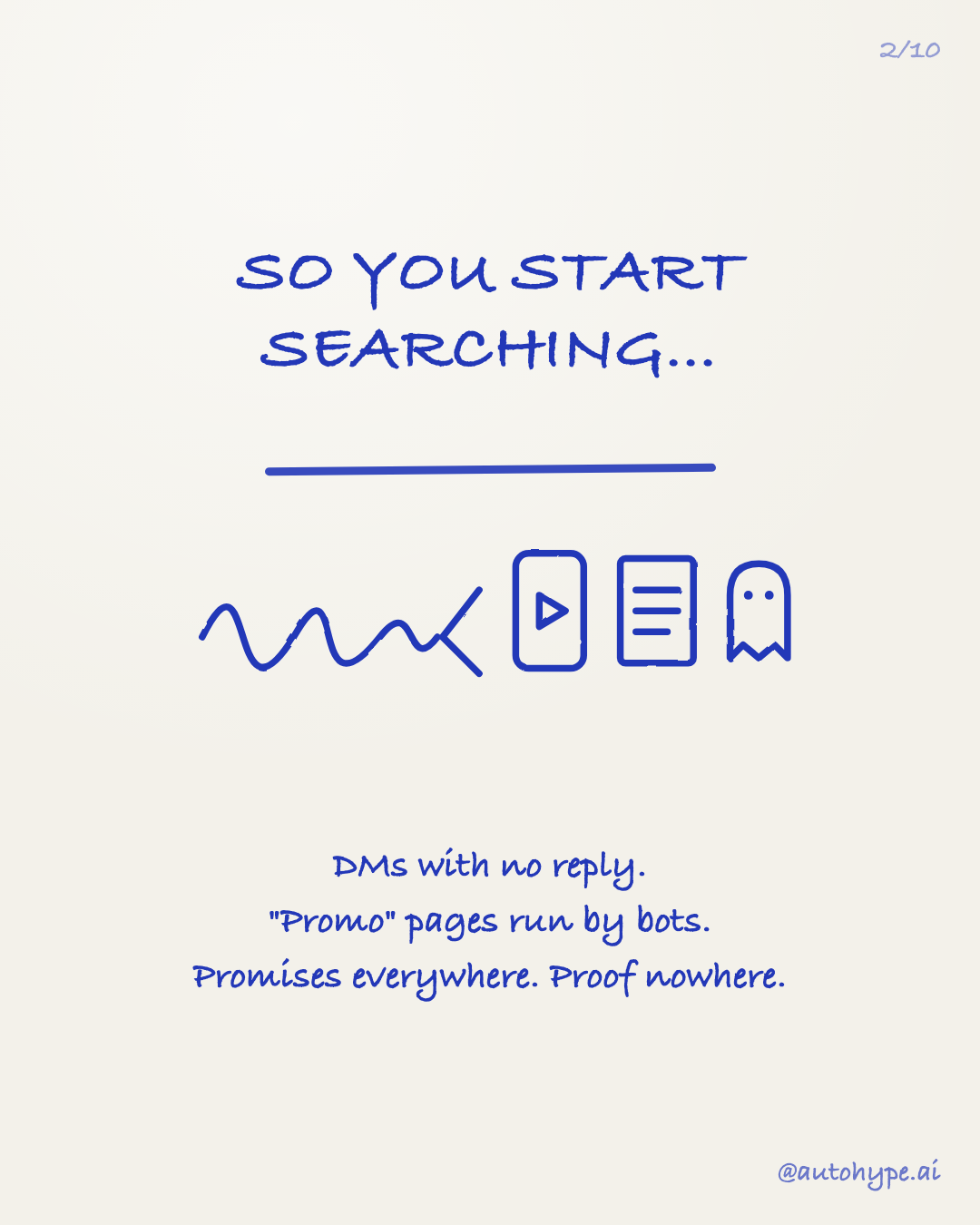
You finished a song. The music is ready — now you need people to hear it, and this is where most artists fall into the gap between two bad options. Option one: DM "promoters" with fire emojis and no listed prices, who reply with rates calibrated to how desperate you sound, then sometimes vanish with the money. Option two: agencies with professional websites and retainers that start at more than your entire release budget. A music promotion marketplace is the third option, and this article explains it from zero: what it actually is, how ordering works step by step, what escrow and refunds mean in practice, how it differs from an agency and from the DM economy — and, just as honestly, who it's not for.
The definition, without jargon
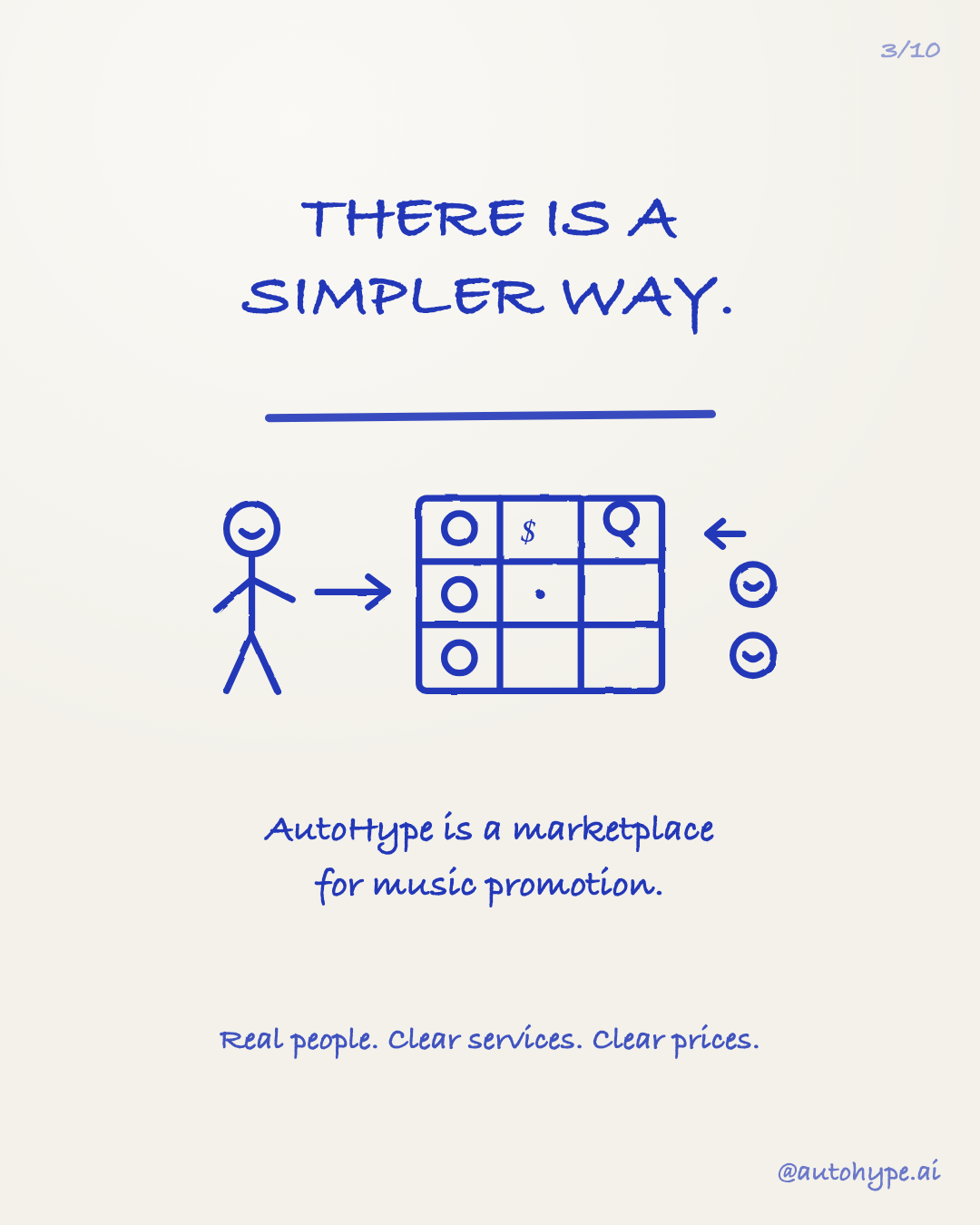
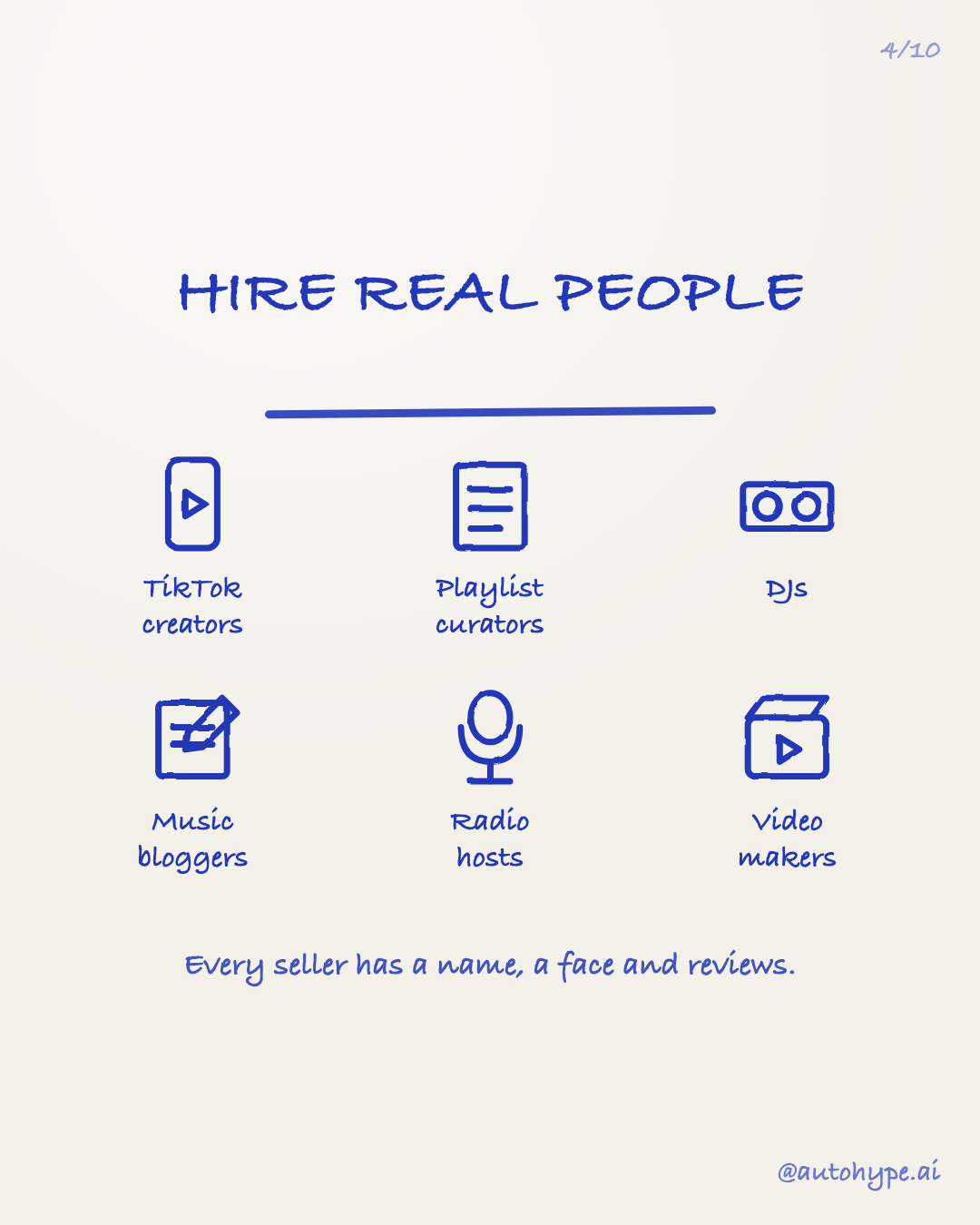
A music promotion marketplace is a website where people who can promote music — TikTok and Instagram creators, playlist curators, DJs, music bloggers, radio hosts, video makers — list their services publicly, each with a written price, a described deliverable and a delivery time. Artists browse the listings, compare sellers side by side, and order the specific service their song needs.
The structural difference from everything else in music promotion is transparency before commitment. Every seller has a name, a face and a review history. Every price is public — the same number for every artist, whether you sound desperate or not. Every listing says what you get and when. Think of how you'd buy anything else online, applied to promotion: that's the whole concept. That's it. That's the product.
On Autohype specifically, listings started at $10, and 17 services were under $20 as of July 17, 2026 — the floors are set by the sellers themselves.
Marketplace vs agency vs the DM "promoter"
The agency model sells you a relationship: a monthly retainer — commonly $2,000 and up — buying strategy, coordination and meetings across a campaign. Done well it's valuable; done at indie budgets it's structurally impossible, and what a retainer guarantees is attention, not deliverables. If the invoice says "strategy", ask what shipped.
The DM economy sells you a mood. "DM for rates" is not a price — it's a fishing rod, and the rate depends on how desperate you sound. No written deliverable, no timeline, no recourse when the post never appears. It's not that every DM promoter is a scammer; it's that the structure makes scamming free and honesty unverifiable.
The marketplace model sells you a transaction: one defined deliverable, one written price, one deadline, money protected until delivery. No retainer, no relationship required, no negotiation. You're not choosing between "cheap" and "professional" — you're choosing between accountable and unaccountable structures.
How ordering works, in four steps
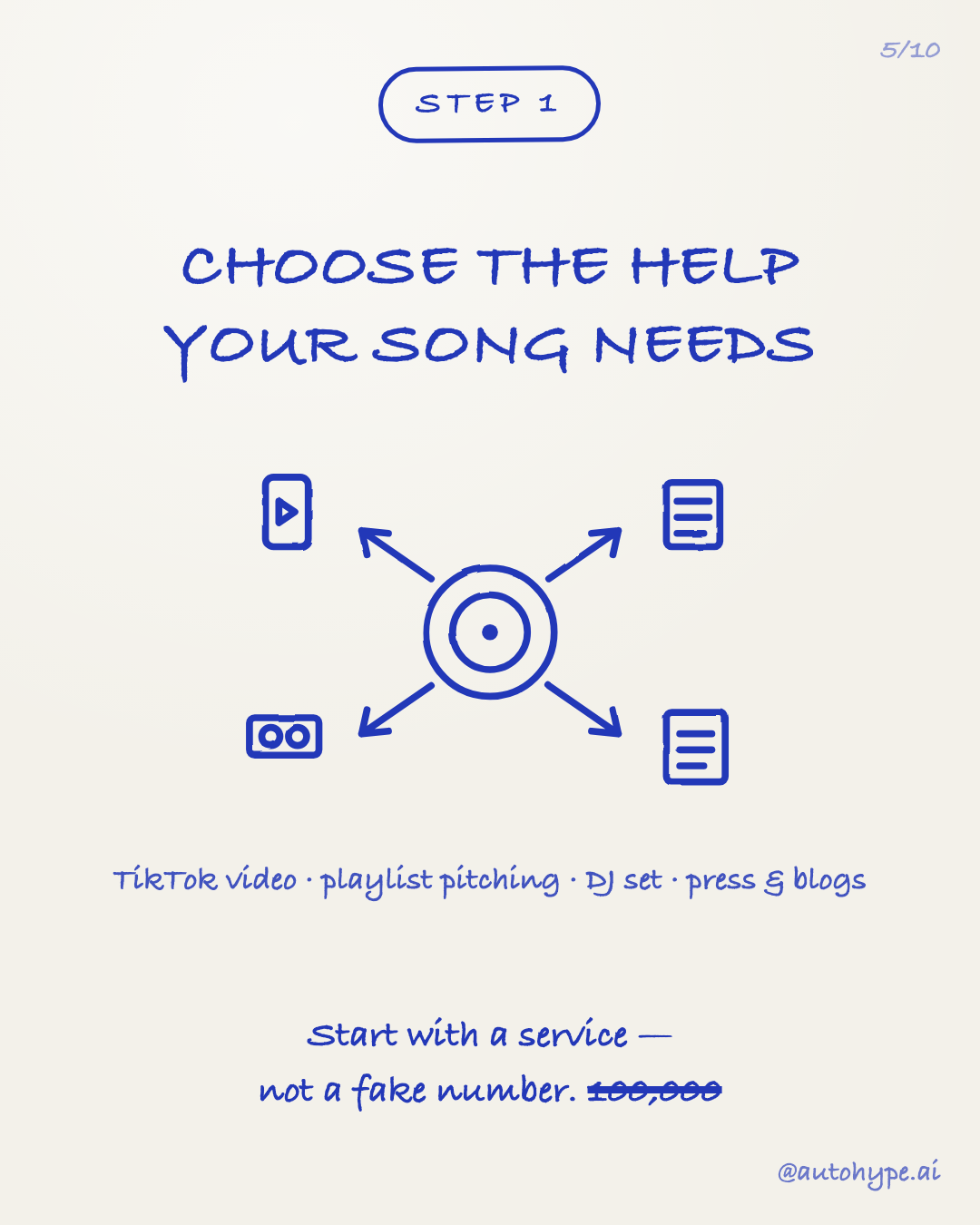
Step one: choose the help your song needs — a TikTok or Instagram creator video, playlist pitching, a DJ set, press and blogs, a YouTube or X push. Start with a service, not a fake number: nobody legitimate sells "100,000 streams," and the crossed-out number on our slide is crossed out for a reason.
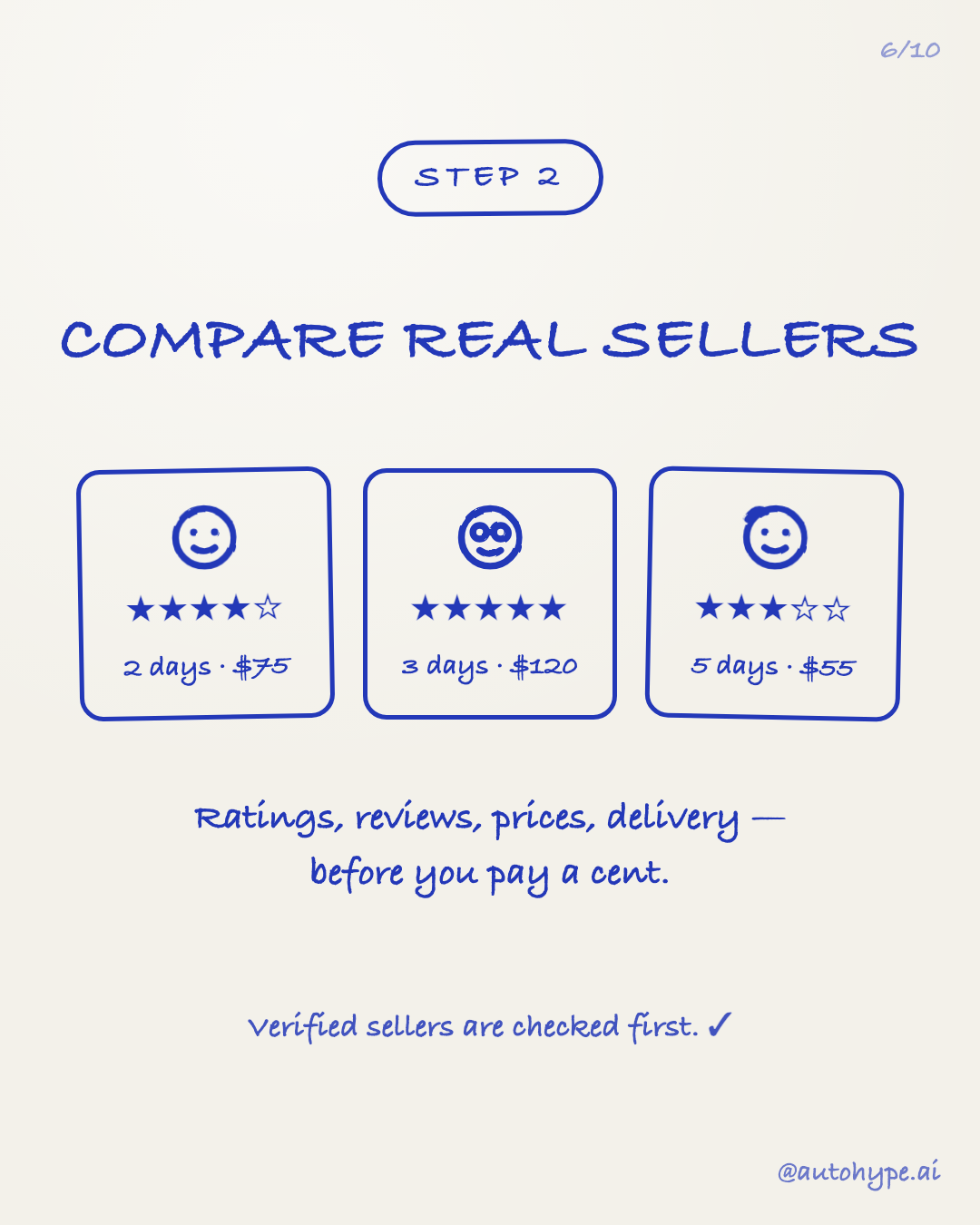
Step two: compare real sellers. Listings sit side by side with ratings, review counts, prices and delivery times — $75 in two days versus $120 in three versus $55 in five — all visible before you pay a cent. Verified sellers have passed identity checks and are flagged first.
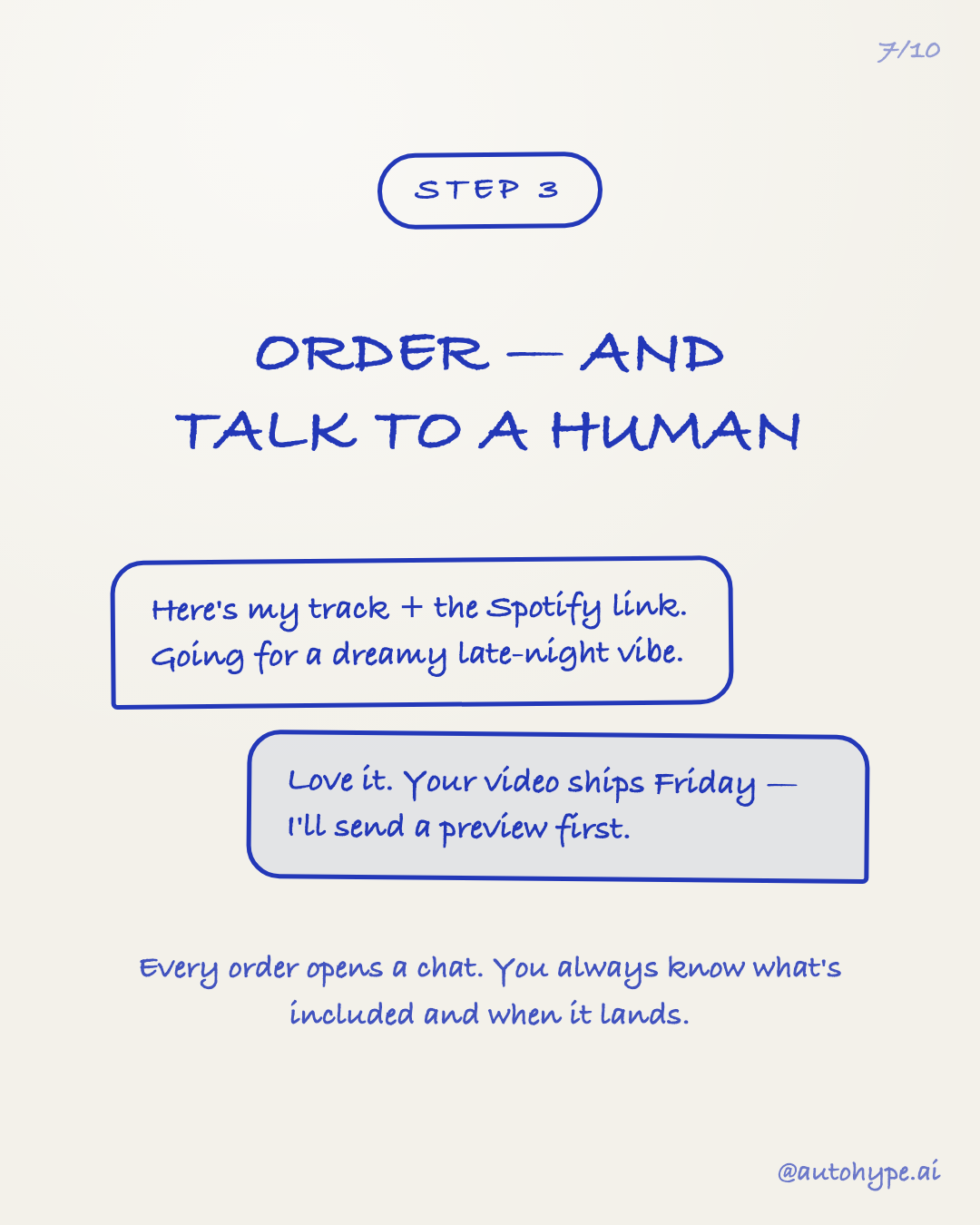
Step three: order and talk to a human. Every order opens a direct chat with the seller: you send the track, the links and the brief ("going for a dreamy late-night vibe"), they confirm scope and timing ("your video ships Friday — I'll send a preview first"). You always know what's included and when it lands. Step four is where the money protection lives — it gets its own section.
Compare Instagram repost campaigns and independent Spotify curator submissions. See which format fits your release, the deliverables, service fees and terms before ordering. No guaranteed views, streams or playlist placement.
Escrow and refunds, explained simply
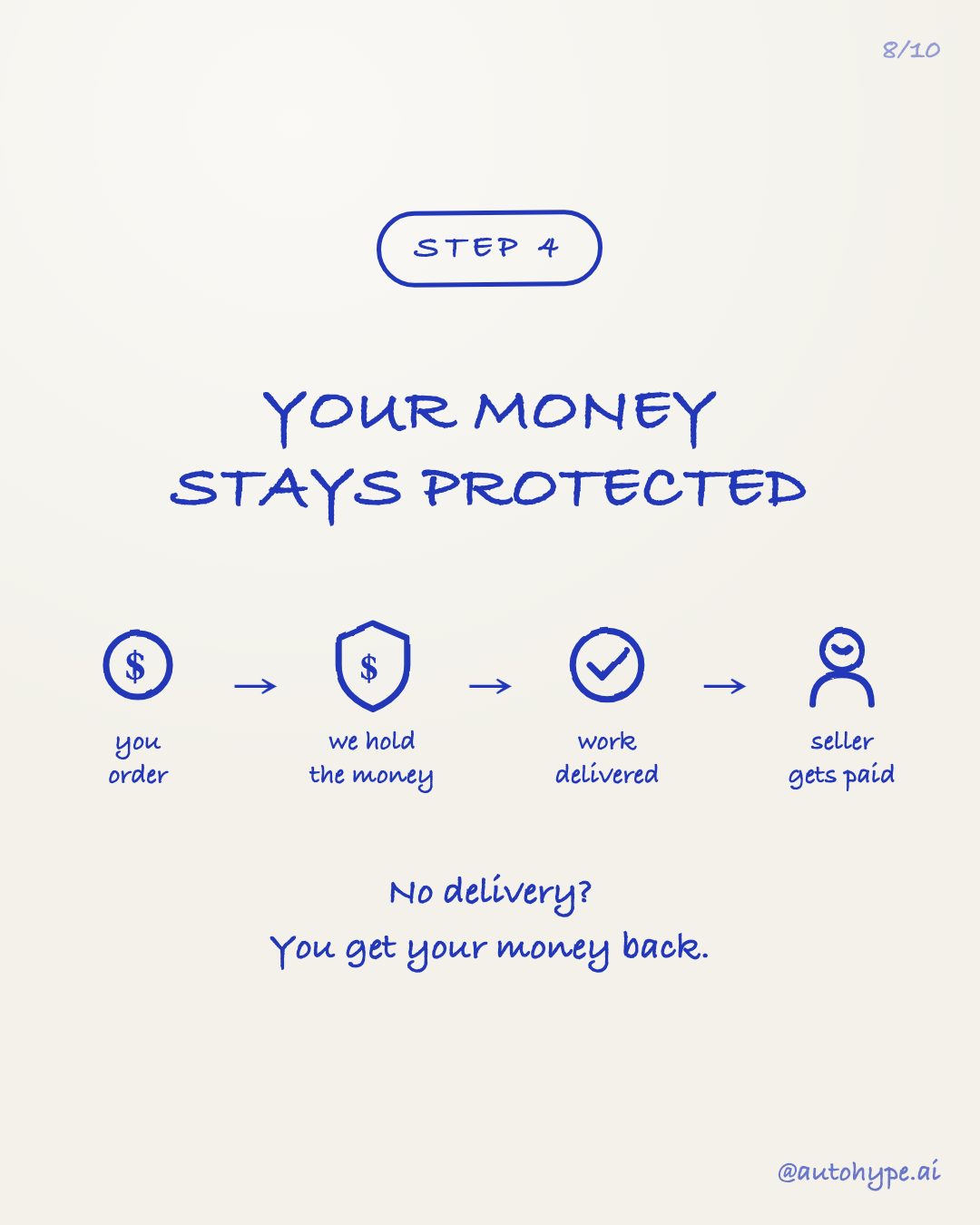
Escrow means the marketplace holds your payment in the middle while the work happens. The flow: you order, the money is held, the work is delivered, and only then is the seller paid. The seller sees the money is real before working; you see the work is real before it's released. Neither side has to trust the other, because neither side is holding both the money and the promise at the same time.
If nothing is delivered, you get your money back — and if delivery is late, the refund is triggered without you having to chase, argue or beg. Compare that to the DM economy's recourse process, which is a second unanswered message and a screenshot thread nobody will act on.
One honest boundary: escrow protects delivery, not outcomes. We guarantee delivery, not results. The video will exist, the pitch will be sent, the press release will go out — whether listeners fall in love with the song is between the song and the listeners, as it should be.
What a legitimate marketplace refuses to sell
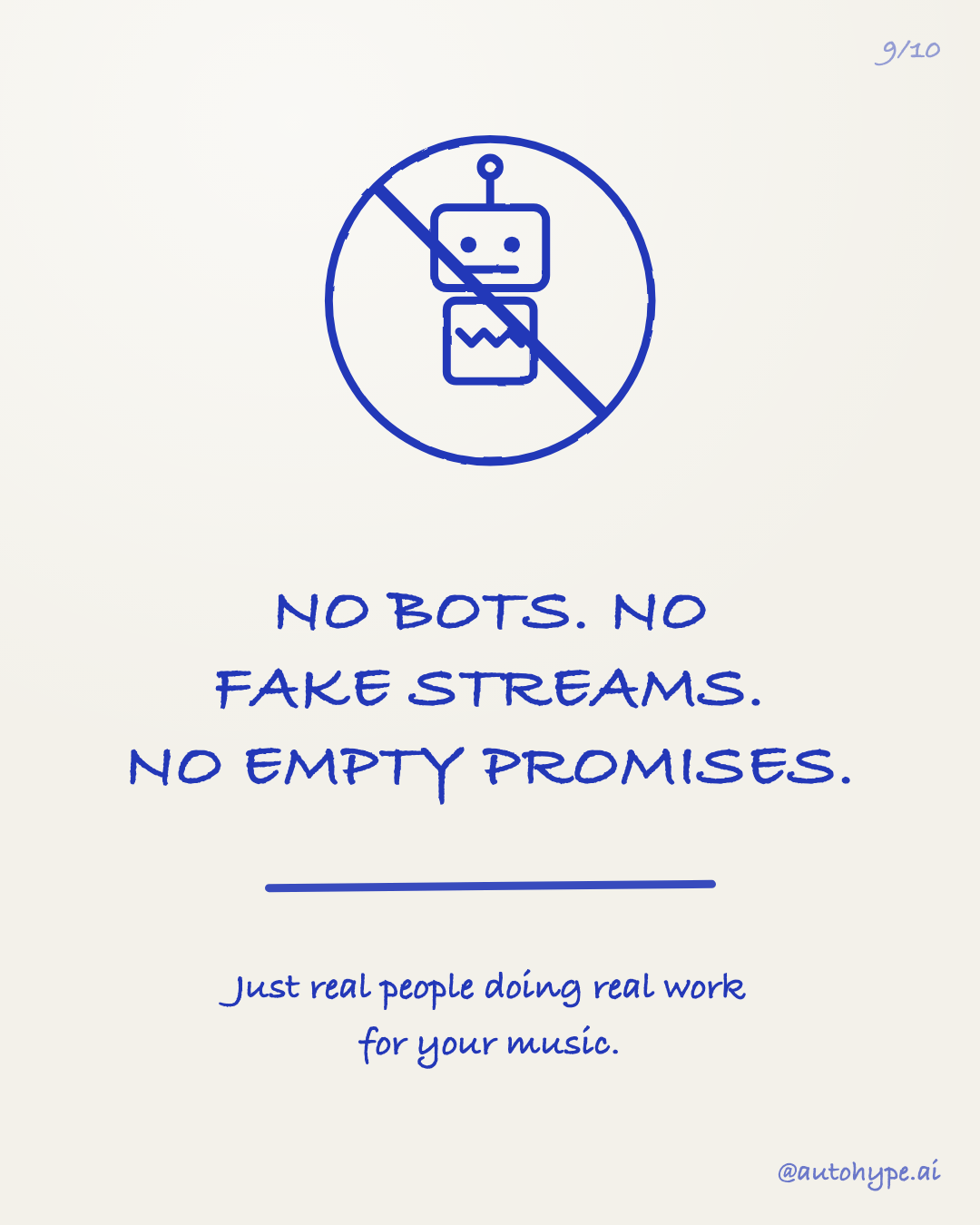
No bots. No fake streams. No empty promises. Fake plays are detectable, routinely purged by streaming platforms, and can get an artist's catalog flagged — a marketplace built on verified humans has no shelf for them.
No guaranteed outcomes, either: any service promising an exact number of streams, followers or viral moments is promising something no honest human can control. And one lie deserves its own sentence because it's the industry's most persistent: access to Spotify's editorial playlists is not for sale, from anyone, at any price — editorial decisions are made by Spotify's own team through the free submission process. Whoever is selling that access is lying about a thing that cannot be bought.
The rule of thumb transfers everywhere: on a legitimate marketplace, you buy defined work from named humans. Anywhere you're offered numbers instead of work, you've left the legitimate market.
Who it's for — and who it's not for
It's for the artist with a finished song, a small budget and functioning skepticism: you want real promotion, you can spend $10–$50 to start, and you'd like proof, prices and refunds rather than vibes. It's also for the artist burned by the DM economy who wants to see who they're paying before they pay.
It's not for you if you want guaranteed streams (nobody honest sells those), overnight virality (a scratch card, not a service), or someone to make the song itself better (that's mixing and mastering, a different aisle). A marketplace multiplies the reach of finished work; it can't fix the work.
If you're in the first group: browse the listings, read reviews, start with one small order. Your song deserves its shot — and its first promoter has a name, a face, a price and a deadline.
Choose the next step for your release.
Compare Instagram repost campaigns and independent Spotify curator submissions. See which format fits your release, the deliverables, service fees and terms before ordering. No guaranteed views, streams or playlist placement.
Compare artist campaigns →Frequently asked questions
How is a music promotion marketplace different from an agency?
An agency sells an ongoing relationship — strategy, coordination and meetings for a monthly retainer that typically starts around $2,000. A marketplace sells single transactions: one deliverable, one written price, one deadline, from $10. You coordinate your own campaign but pay only for work that ships, with escrow instead of trust doing the protecting.
Is it safe to pay a stranger online to promote my music?
On a marketplace with escrow, yes — structurally safer than any DM arrangement. Your money is held by the platform, not the seller, until the work is delivered; if nothing ships or delivery is late, it's refunded. Add named profiles, verification checks and public review histories, and the anonymous-stranger problem the DM economy runs on is designed out.
How much does a music promotion marketplace cost?
There's no subscription — you pay per order, at the price written on the listing. On Autohype, floors verified on July 17, 2026: playlist pitching from $10, YouTube and X pushes from $10, TikTok/Instagram creator videos from $20, press from $20, with 17 services under $20. Sellers set their own prices, so check the live listings.
Does ordering promotion guarantee my song gets streams?
No — and treat any service claiming otherwise as a red flag. A marketplace order guarantees the work: the video posted, the pitch delivered, the article published, with a refund if it doesn't ship. We guarantee delivery, not results. Real listeners decide the rest, which is exactly what makes their reaction worth something.