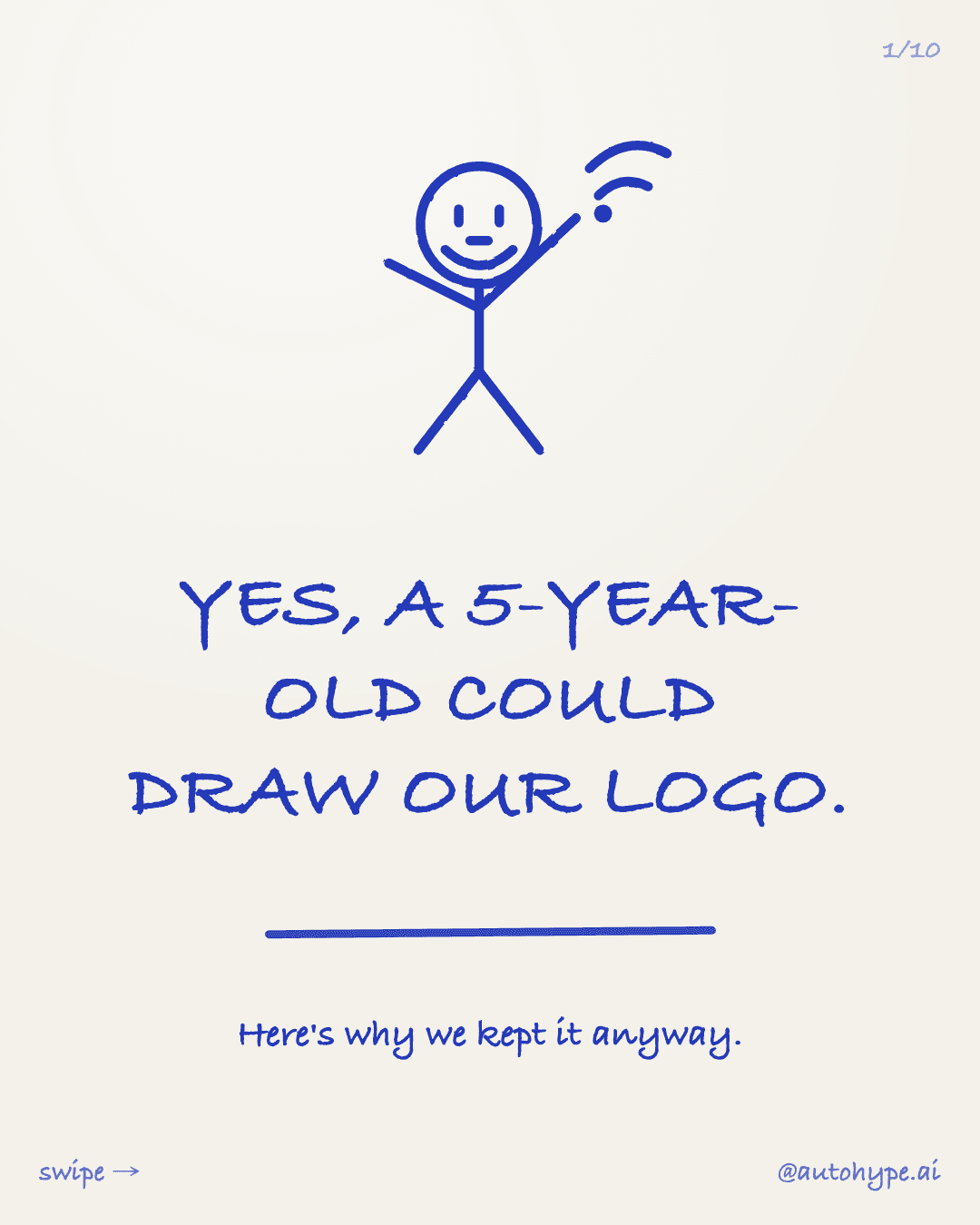
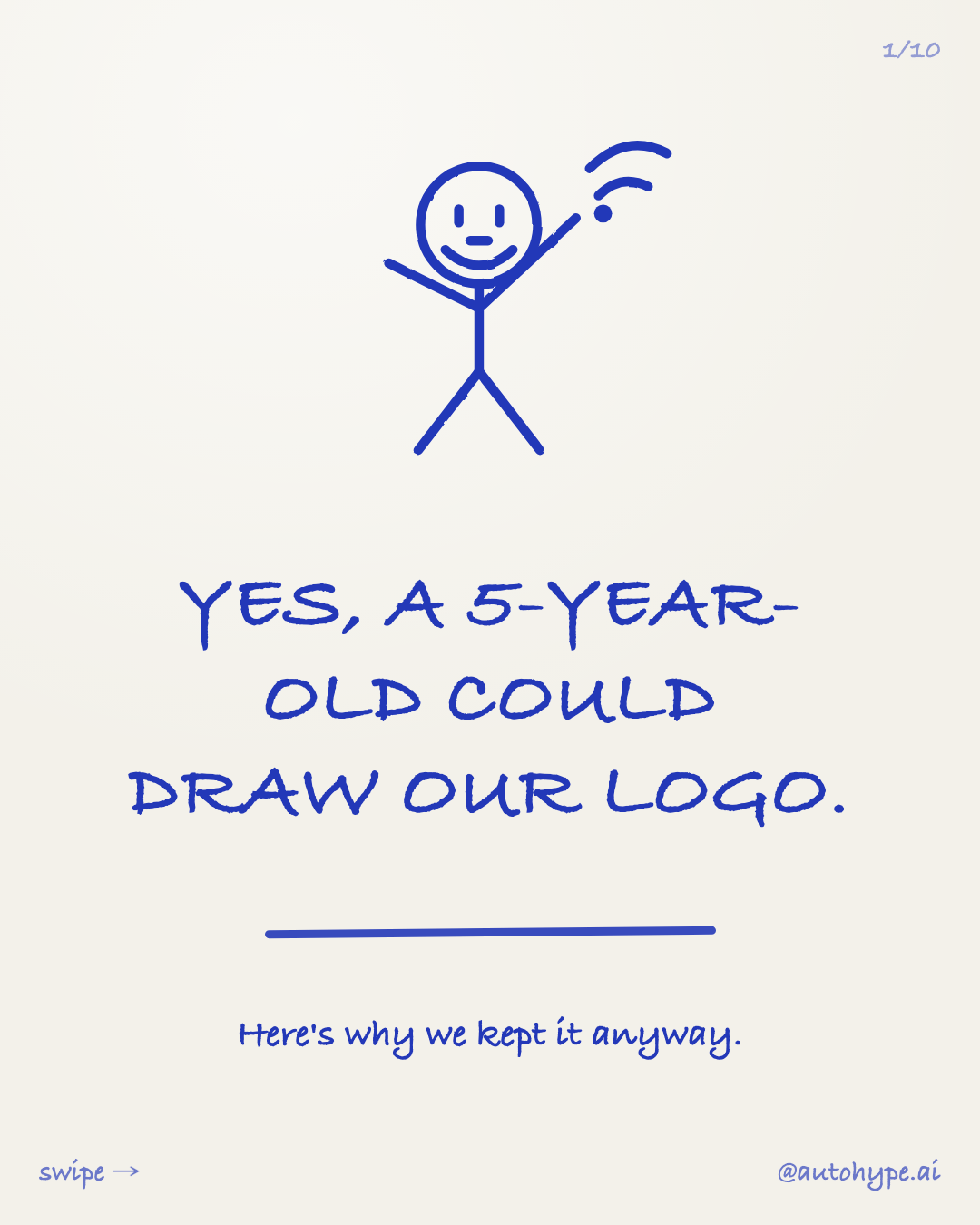
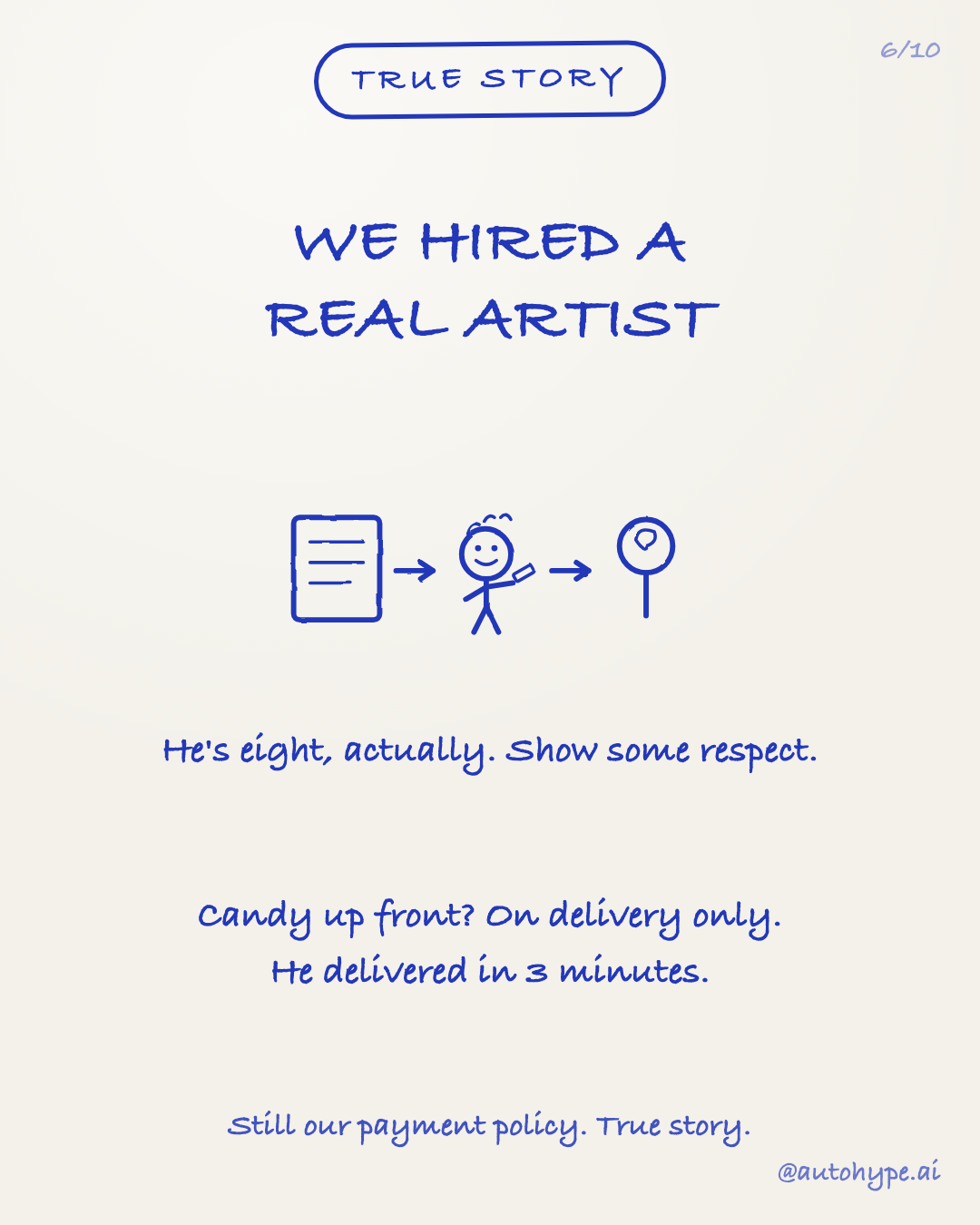
The most common question in our DMs isn't about playlist pitching or delivery windows. It's some version of: 'why does your logo look like a 5-year-old drew it?' He's eight, actually. Show some respect. This is the story of the three-minute logo — the artist who drew it, the candy negotiation that accidentally became our entire payment policy, and the branding lesson buried inside the joke. Spoiler on the lesson, because it applies directly to your music: done beats perfect, and trust doesn't come from polish. It comes from what you're willing to put in writing.

He's eight, actually
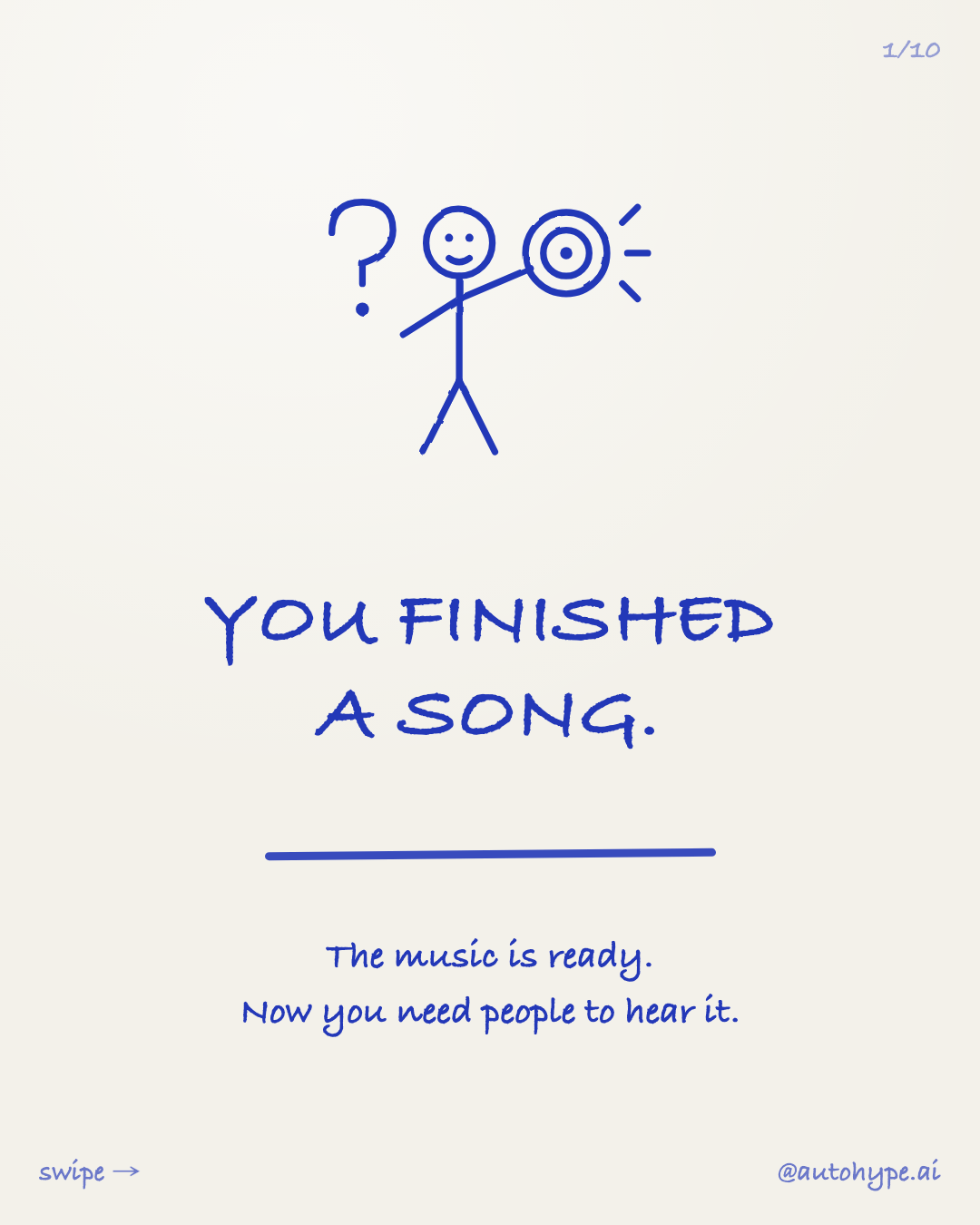
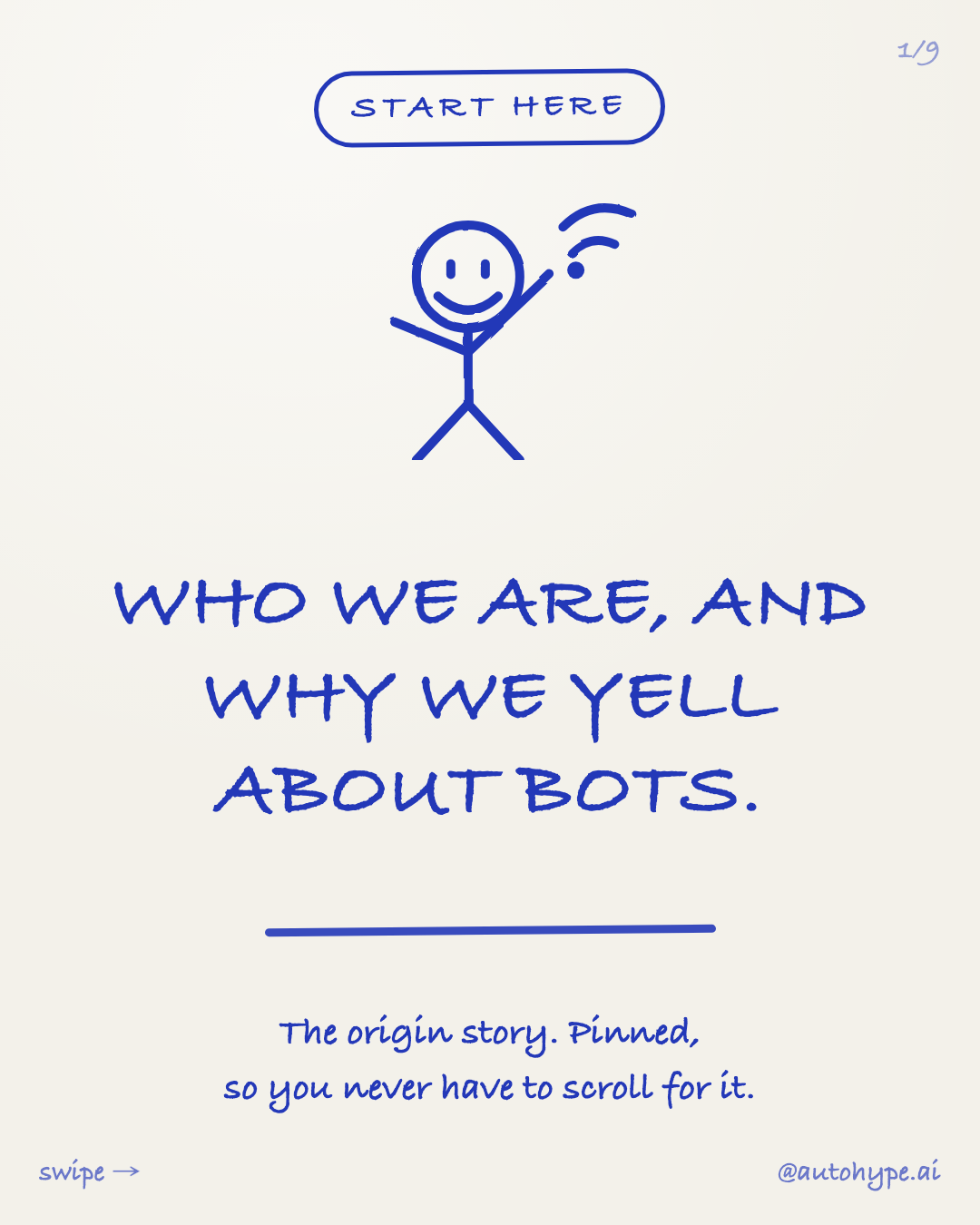
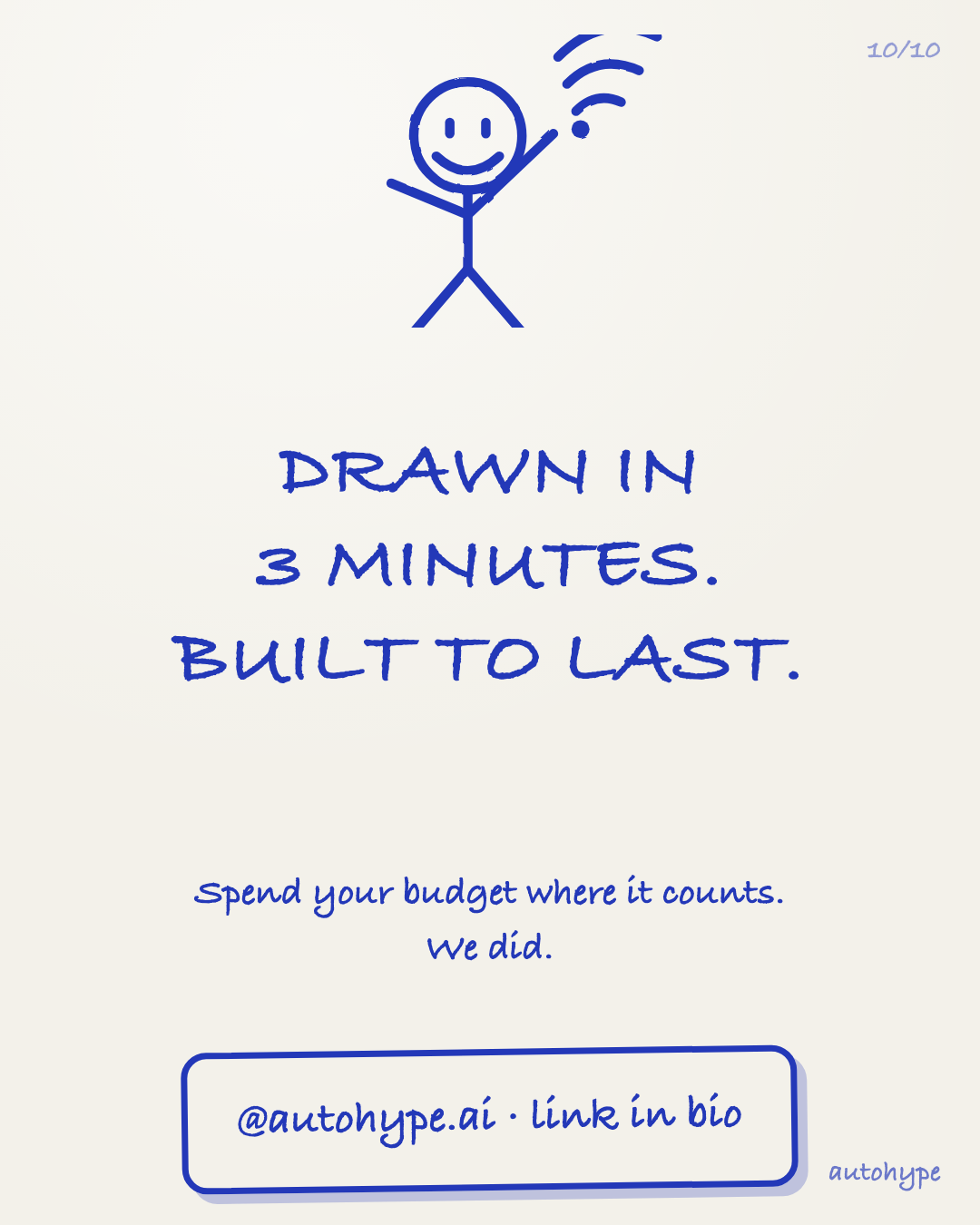
When it was time for AutoHype to have a logo, we did not hire an agency. We hired a real artist: age eight, strong opinions, hourly rate payable in candy. The brief was one line — 'draw someone whose music is finally being heard.' Three minutes later he handed back a stick figure, grinning, one arm up, waving a wifi signal. Commission complete.
That's the house story, and we're keeping it. Is every detail notarized? It's a story about a stick man — grade it accordingly. But the part that matters is documented daily in production: the drawing is the logo, the logo took three minutes, and the payment terms from that negotiation now run the entire company. More on that in a second.
We showed it around anyway, as due diligence. It tested terribly with investors and great with artists. Easy choice.
The candy negotiation that became our escrow
Our artist, being eight, opened negotiations the way all great vendors do: candy up front. We countered: candy on delivery only. He grumbled — professionally — then delivered in three minutes and was paid in full, on the spot, as agreed.
Look at the structure of that deal for a second. Work defined in advance. Price agreed in advance. Payment released only on delivery. That is escrow — and an eight-year-old understood it instantly, negotiated it in under a minute, and never once asked us to 'just trust him'. Which tells you everything about how complicated fair payment terms actually are: they aren't.
It's still our payment policy, unchanged, for every order on the marketplace: the money is held until the work is delivered, and if it isn't delivered, it comes back to you. The whole music-promo casino ran on candy-up-front. We run on the kid's deal.
Compare Instagram repost campaigns and independent Spotify curator submissions. See which format fits your release, the deliverables, service fees and terms before ordering. No guaranteed views, streams or playlist placement.
Where the design budget went instead
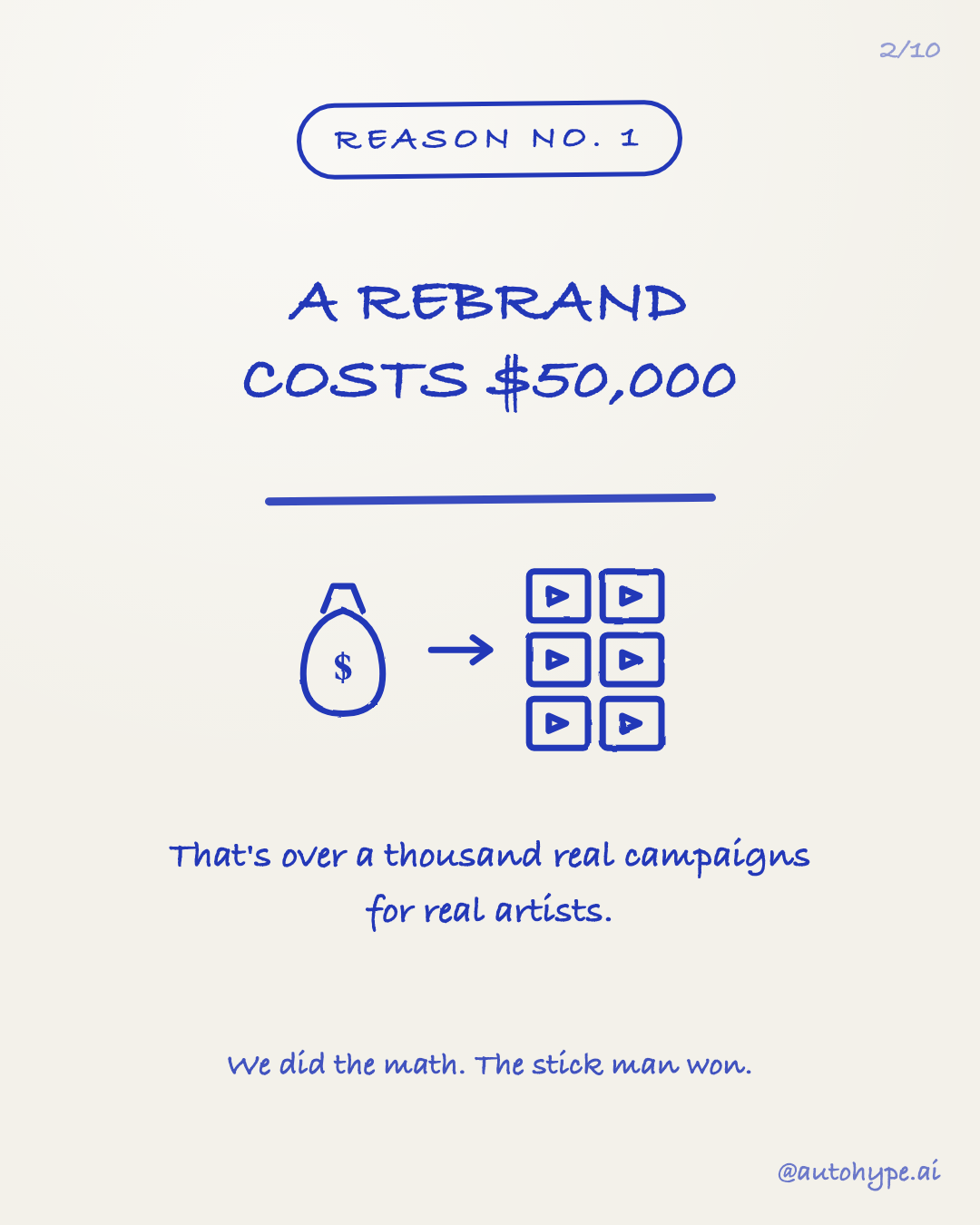
A serious agency rebrand runs on the order of $50,000 — that's the ballpark the branding industry itself likes to quote for the full treatment: strategy decks, mood boards, a gradient swoosh with a naming ceremony. We did the math on what else that money buys. At our marketplace floors — playlist pitches from $10, TikTok and Instagram videos from $20, prices set by the sellers themselves (verified July 2026) — $50,000 is over a thousand real campaigns for real artists. We did the math. The stick man won.
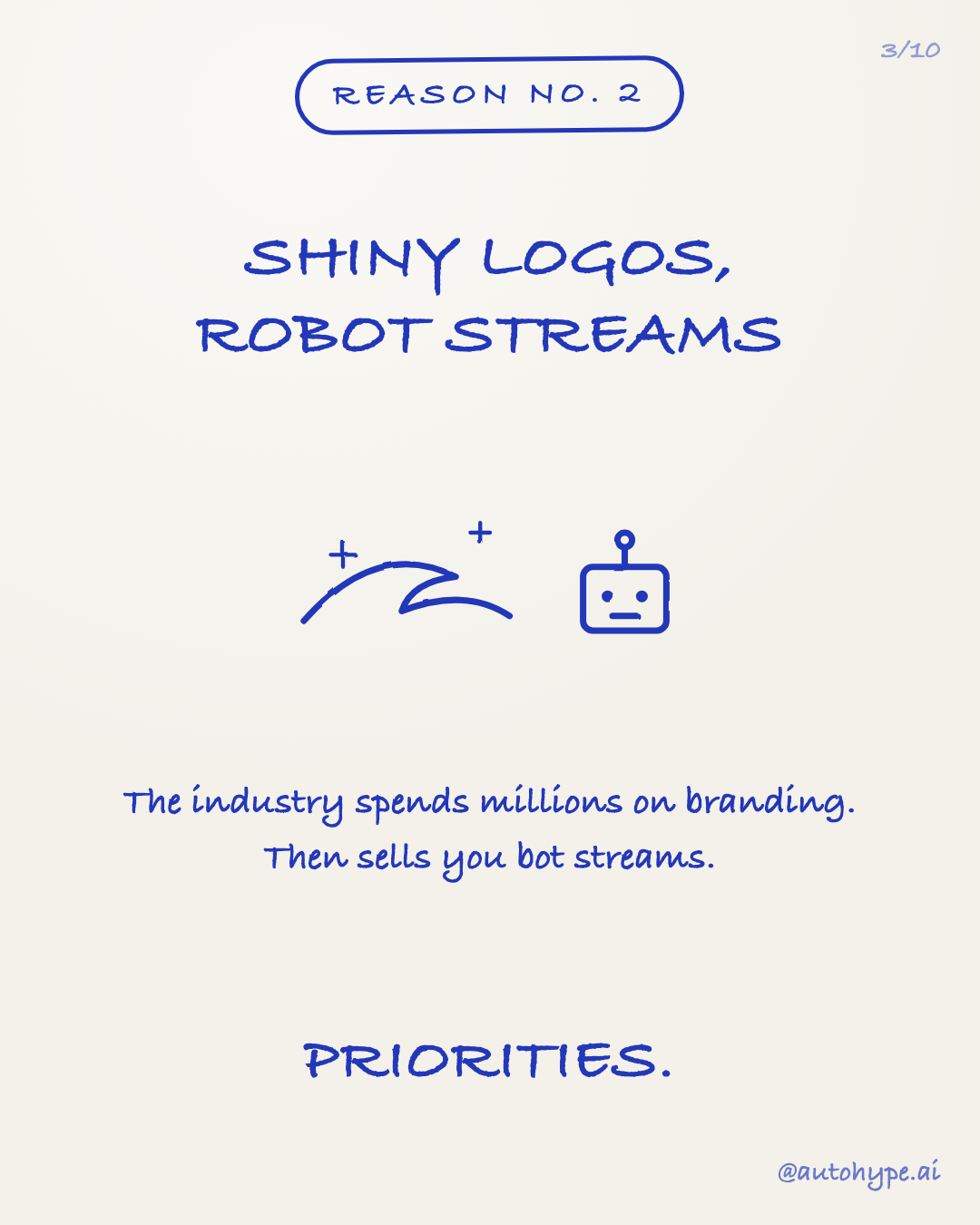
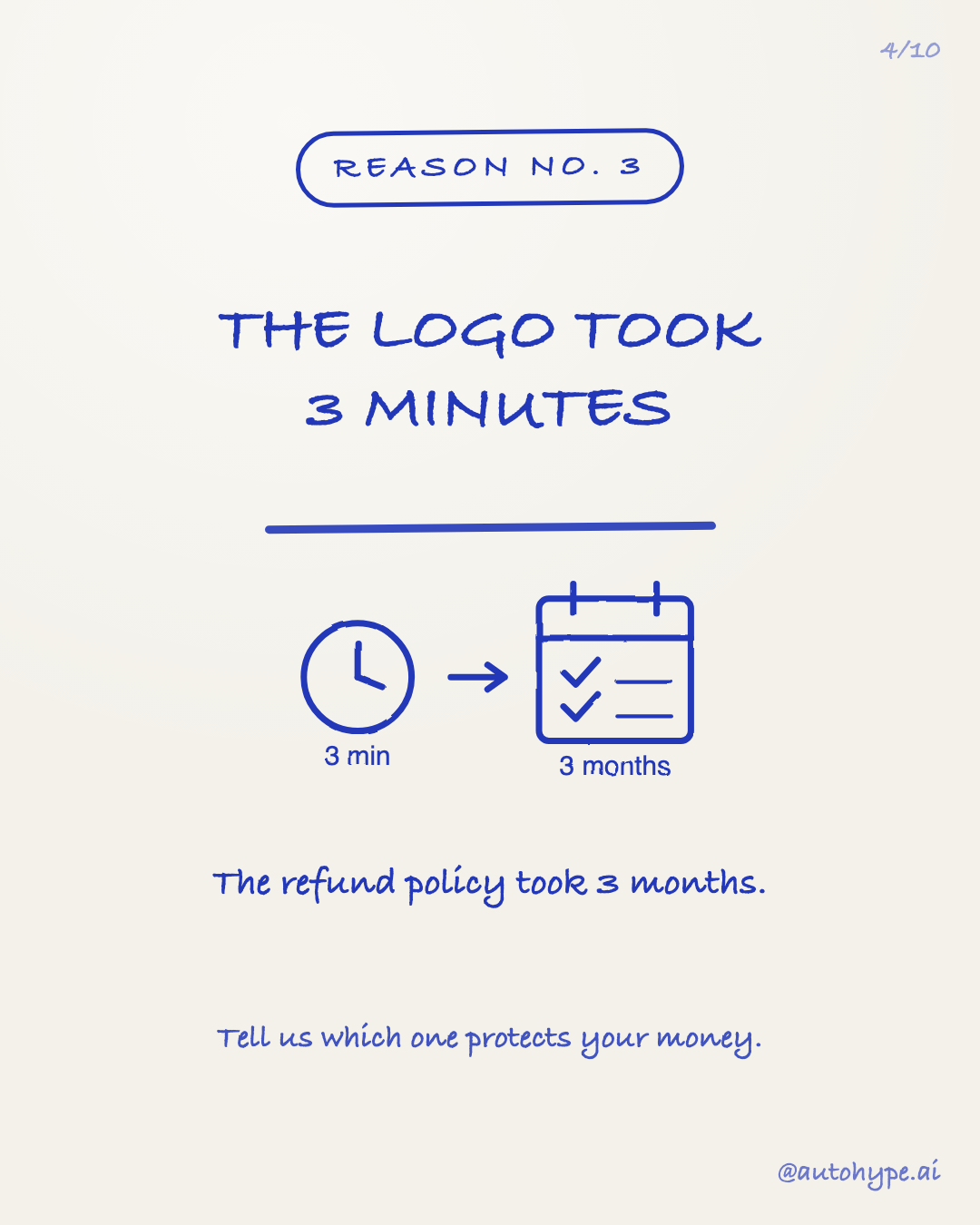
There's a sharper point hiding under the joke. This industry has a habit of spending millions on branding while selling artists bot streams behind the shine. Priorities. A beautiful logo has never once protected a customer's money — a refund policy does that. Ours took three months to get right. The logo took three minutes. Tell us which one protects your money.
The real branding lesson: done beats perfect
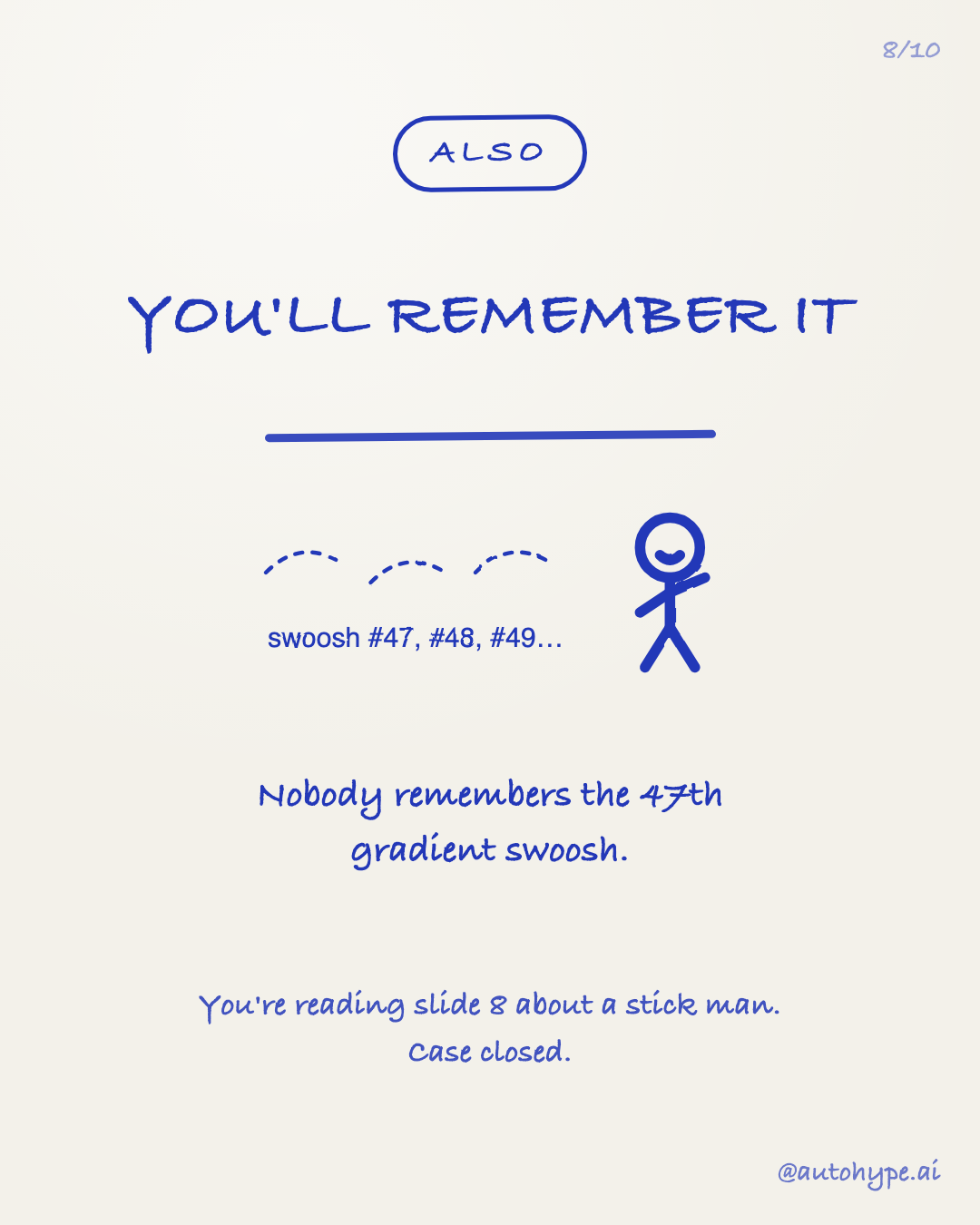
Nobody remembers the 47th gradient swoosh. Nobody has ever screenshot a tasteful sans-serif wordmark and sent it to a friend. Meanwhile, you are reading a full article about a stick man. Case closed.
The lesson transfers directly to your music. The cover art you keep redoing, the artist name you keep second-guessing, the 'brand refresh' standing between you and your next release — none of it is what people remember. Done and distinctive beats perfect and pending, every single time, because only released things get the chance to become memorable. Your song in drafts isn't waiting for a better logo. Ship the version that exists.
And if your visual identity budget is currently zero: congratulations, you're in excellent company. Ours was three pieces of candy, paid on delivery.
Trust comes from honesty, not polish
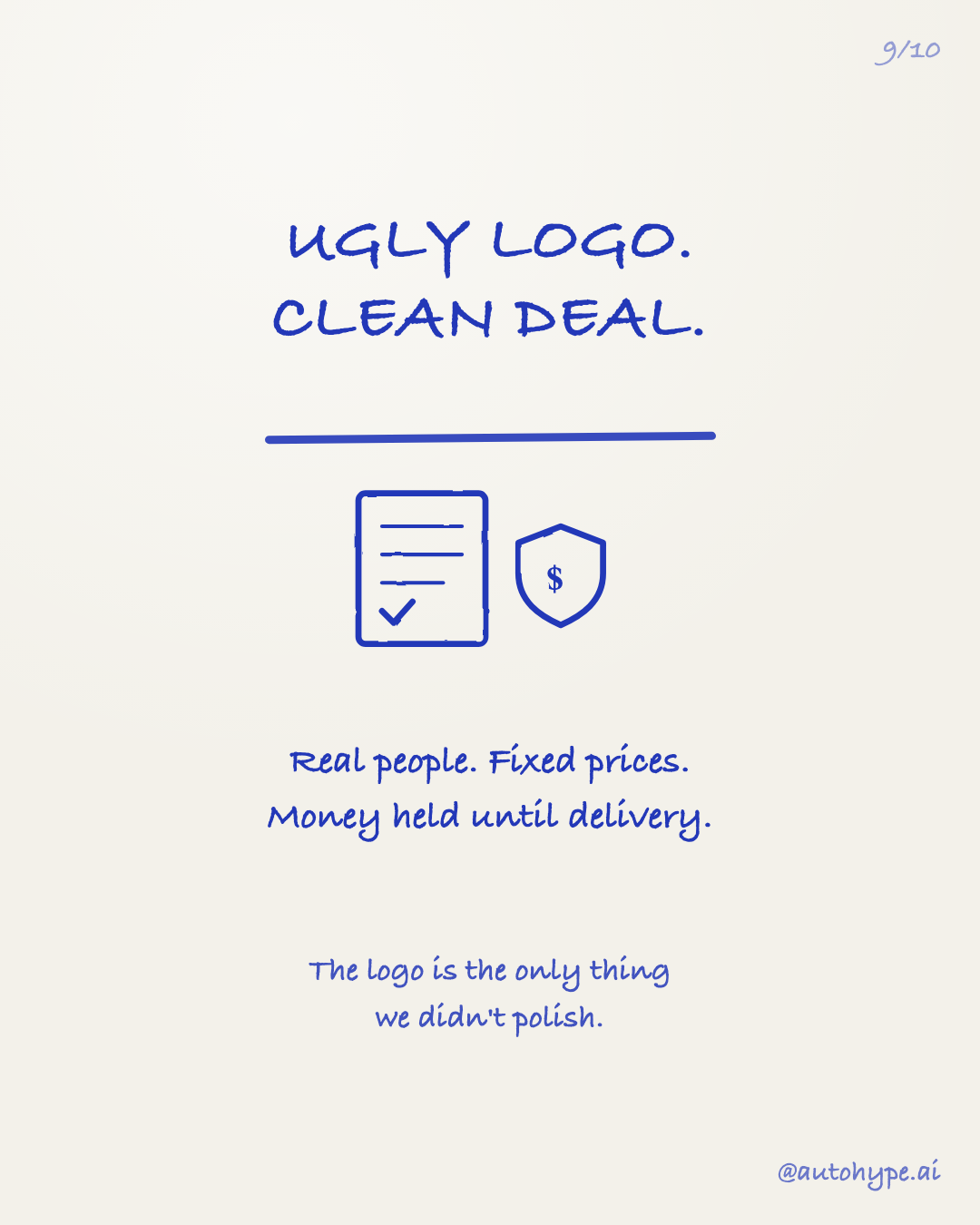
Here's the actual branding secret, the one agencies can't sell you: ugly logo, clean deal beats shiny logo, dirty deal — and it isn't close. Real people, fixed public prices, money held until delivery, reviews in the open. The logo is the only thing we didn't polish. We guarantee delivery, not results — a sentence no design budget in the world can improve, because its entire value is that we keep it.
So, the FAQ, for the record. Could we afford a better logo now? Yes. Will we change it? No. The stick man was drawn in three minutes and built to last, and every dollar that doesn't go into gradient swooshes goes into the boring machinery that protects your money. Spend your budget where it counts. We did.
Choose the next step for your release.
Compare Instagram repost campaigns and independent Spotify curator submissions. See which format fits your release, the deliverables, service fees and terms before ordering. No guaranteed views, streams or playlist placement.
Compare artist campaigns →Frequently asked questions
Who really drew the AutoHype logo?
House legend says a real artist, age eight, from a one-line brief — 'someone whose music is finally being heard' — in three minutes, paid in candy strictly on delivery. What's verifiably true: the stick figure is the logo, and those payment terms (work delivered first, then payment released) are literally how every order on the marketplace works today.
Why not upgrade to a professional logo now?
Because it works. It tested terribly with investors and great with artists, it's more memorable than another gradient swoosh, and the $50,000 a serious rebrand tends to cost buys over a thousand artist campaigns at our marketplace floors. The logo took 3 minutes; the refund policy took 3 months. We keep investing in the second kind of thing.
What's the lesson here for artists?
Two, actually. Done beats perfect: distinctive-and-released outperforms polished-and-pending, for logos and for songs — stop letting visuals delay your release. And trust comes from honesty, not polish: written prices, real deliverables, and kept promises build more credibility than any amount of design budget.