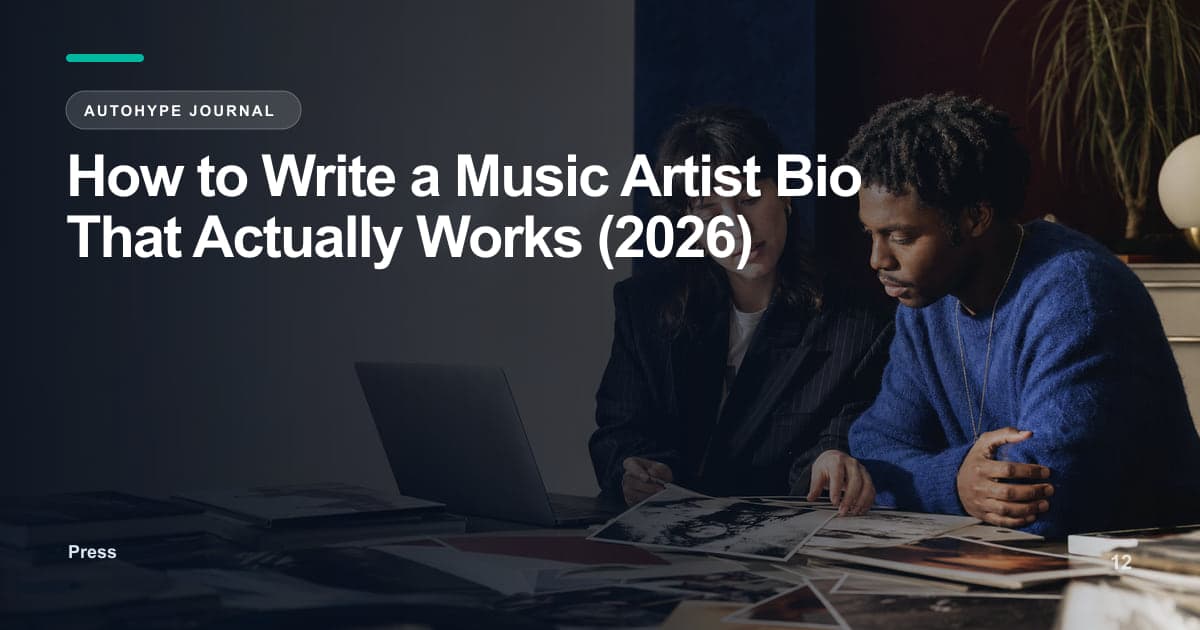
Most artist bios are terrible. They sound like a LinkedIn profile written by someone who's never met the artist, or a Wikipedia article about a band nobody's heard of. They list influences, hometowns, and years active — none of which make a curator, journalist, or fan feel anything. A good artist bio does one thing: make the reader curious enough to press play. Here's how to write one.
The anatomy of a bio that works
Every artist bio needs three versions: a 1-sentence version (for social media bios), a 100-word version (for press kits and playlist pitches), and a 300-word version (for Spotify and press release). Each serves a different context. Write all three.
The structure that works for all three: hook sentence (what makes you different or interesting), sound description (what you sound like, without genre clichés), context (relevant background — location, collaborations, releases, audience), momentum (what's happening now that makes this the right time to pay attention).
What to avoid
'[Artist] draws influences from...' — Everyone has influences. Unless you're explicitly blending two genres in an unusual way, skip the influences.
'[Artist] began their musical journey at age...' — Nobody cares when you started playing piano. Start with what makes your music interesting now.
Genre clichés: 'genre-defying', 'unique sound', 'unlike anything you've heard before' — these are red flags for curators. Describe your sound specifically: 'lo-fi hip-hop with jazz chord progressions and introspective lyrics about urban loneliness' beats 'unique blend of genres'.
Compare Instagram repost campaigns and independent Spotify curator submissions. See which format fits your release, the deliverables, service fees and terms before ordering. No guaranteed views, streams or playlist placement.
The 1-sentence formula
Formula: [What you make] + [specific descriptor] + [who it's for / what it does]. Examples: 'Dark phonk producer making aggressive instrumental music for late-night drivers and gym sessions.' 'Singer-songwriter from Montreal making sad folk music for people who miss someone they can't name.' 'Bedroom EDM producer blending house and trance for festival crowds that don't exist yet.'
This goes in your TikTok bio, Instagram bio, and Spotify artist bio. It's the 3-second pitch that either hooks someone or loses them. Write 5 versions, pick the most specific one.
The Spotify bio (300 words)
Spotify's artist bio is read by listeners who just heard your music and want to know more. Write it in third person, but don't make it sound corporate. Write it as if a journalist who genuinely loves your music wrote it after interviewing you for 30 minutes.
Include: the story behind your sound (in one genuine, specific paragraph), your location and community, your most notable releases or milestones (with actual numbers if they're interesting), and one sentence about what you're working on now. End with a line that sounds like a reason to follow.
Choose the next step for your release.
Compare Instagram repost campaigns and independent Spotify curator submissions. See which format fits your release, the deliverables, service fees and terms before ordering. No guaranteed views, streams or playlist placement.
Compare artist campaigns →Frequently asked questions
Should my artist bio be in first or third person?
Third person for press kits, Spotify, and any context where it will be read by a journalist or curator. First person for social media bios where it reads more naturally. Maintain consistency within each platform.
How often should I update my artist bio?
Update every time something significant changes: new notable release, major milestone (100K streams, 10K followers), new collaborations, touring. Keep it current — an outdated bio with '2023 releases' in 2026 signals an inactive artist.
Do I need an artist bio if I'm just starting out?
Yes — even a 2-sentence bio is better than nothing. Playlist curators and journalists who discover you via TikTok will immediately search for context about who you are. A blank Spotify bio and empty press kit stops that process cold.